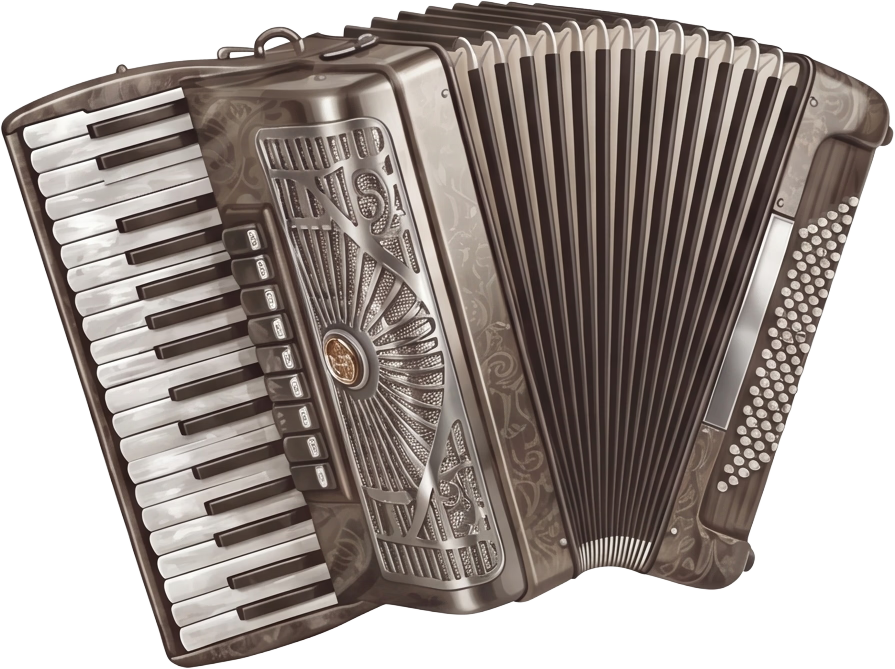
Accordion
Free-reed keyboard solo instrument
Free-reed keyboard solo instrument
The sound of the accordion is powerful, dense, “breathing,” and highly versatile. Through registers, it can imitate a flute, bassoon, or organ, or sound in the characteristic French musette style with a slight vibrato “chorus”. It simultaneously replaces both melody and bass accompaniment.
The instrument consists of right and left half-casings connected by bellows. The right hand features a piano keyboard for playing melody, while the left uses a button system where pressing a single button sounds a pre-made chord or bass. Inside are metallic reed plates.
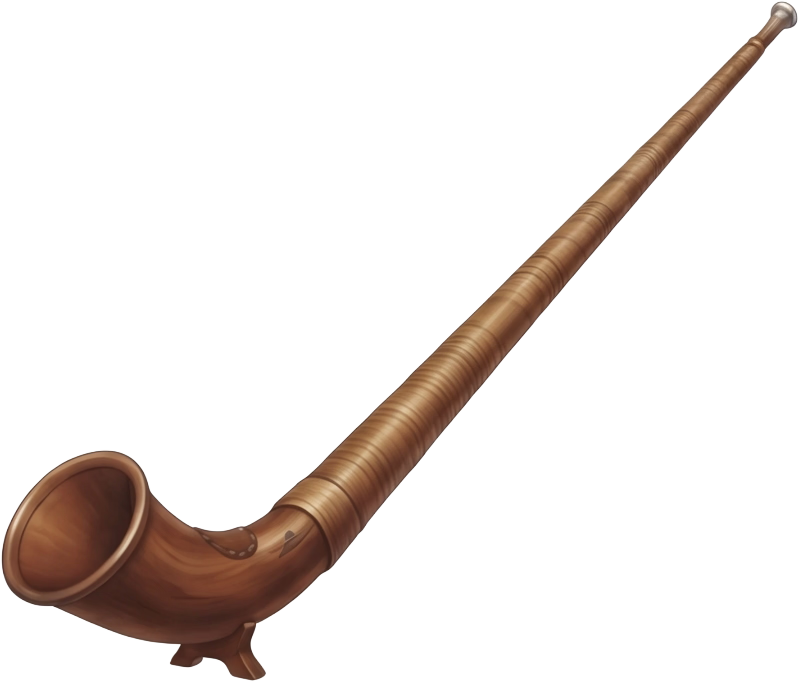
Wind signal instrument
The sound of the alphorn is deep, powerful, warm, and carries across the mountains for many kilometers. Due to the enormous length of the tube, it produces the purest overtones of the natural scale, creating a majestic, tranquil echo.
A long straight or slightly curved conical wooden horn at the end (often made from a naturally curved spruce trunk), connected to a wooden mouthpiece. The horn has no valves or holes — all notes are extracted by the power of breath and lips (natural overtone series).
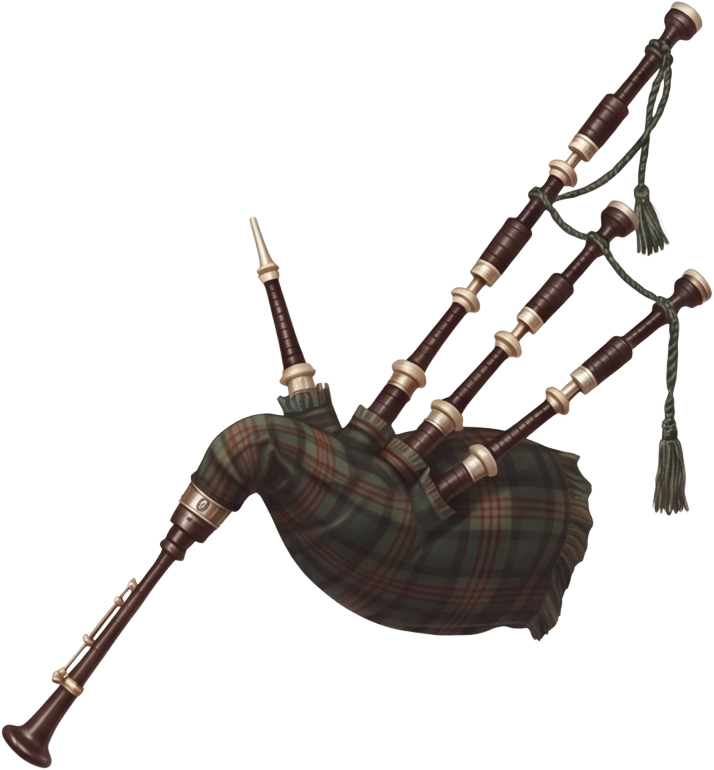
Solo wind instrument
The sound of the bagpipes is deafeningly loud, sharp, piercing, and entirely continuous. The melody is played over a powerful, droning chord, creating an epic, solemn, and slightly hypnotic soundscape.
The core of the instrument is an airtight bag (traditionally sheep or goat skin, today often synthetic). The musician blows air into it through a blowpipe. Air from the bag under elbow pressure flows through a melody pipe (chanter) with fingerholes and several drone pipes emitting a constant single tone.
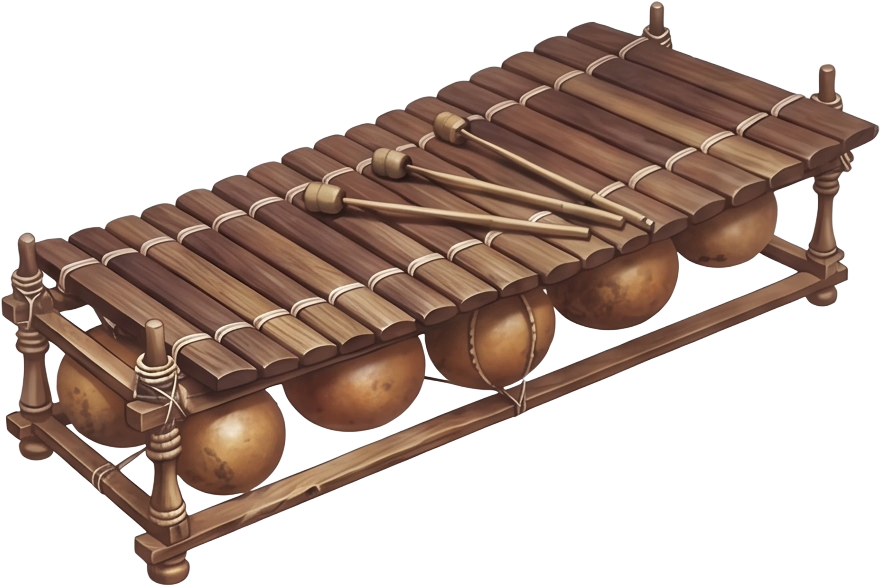
Melodic percussion instrument (xylophone)
The sound of the balafon is warm, wooden, soft, yet very bright and resonant due to the natural gourd resonators under each plate, into which spiderwebs are glued for a rattling effect.
Hardwood bars are fixed on a frame above a row of dried calabash gourds of various sizes. Holes are made in the gourds and sealed with thin spiderweb or film, producing a characteristic rattling timbre when struck with wooden mallets with rubber tips.
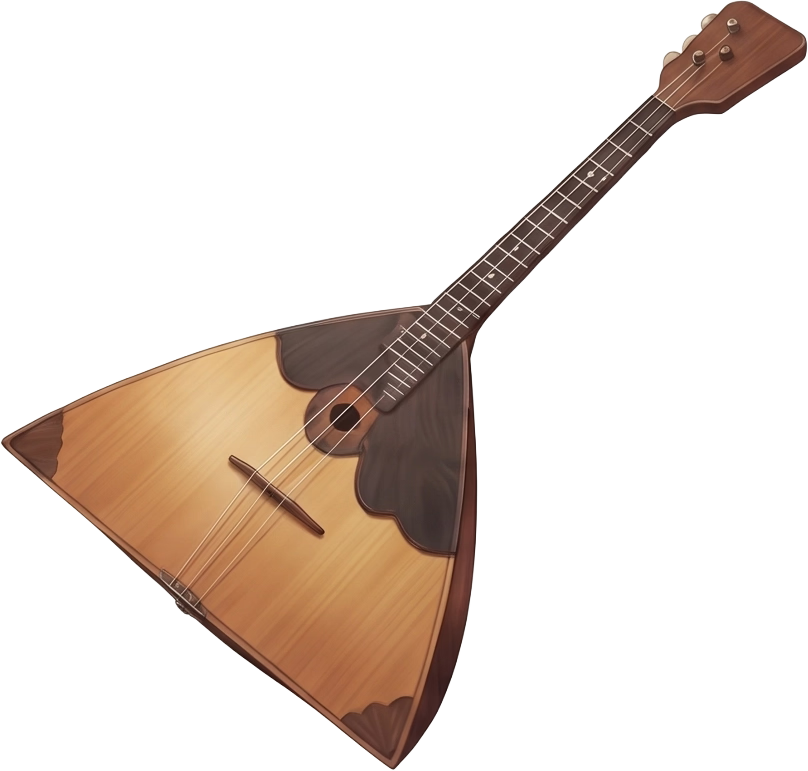
Plucked string solo instrument
The sound of the balalaika is ringing, open, spirited, and slightly dry. The instrument is ideal for performing rapid dance tunes and chastushkas, yet through vibrato technique it can sound deeply lyrical and soulful.
It features a recognizable triangular wooden body glued together from several segments (staves). Only 3 strings are stretched across its long fretted neck (modern academic tuning: two E notes of the same octave and one A). Sound is produced by strumming with the index finger or plucking.
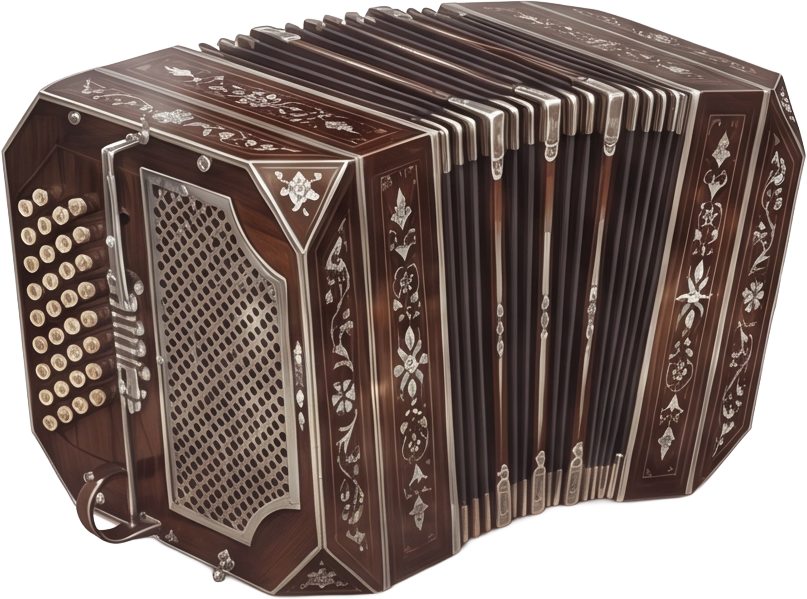
Pneumatic instrument, soul of tango
The sound of the bandoneon is piercing, sharp, nostalgic, with a pronounced reed “cry”. Unlike the accordion, it has a square body and a complex button system where compressing and expanding the bellows on the exact same button can produce different notes.
A square instrument with polygonal covers on the sides, featuring a huge number of mother-of-pearl buttons (up to 71–74 buttons) controlling a complex system of internal reeds.
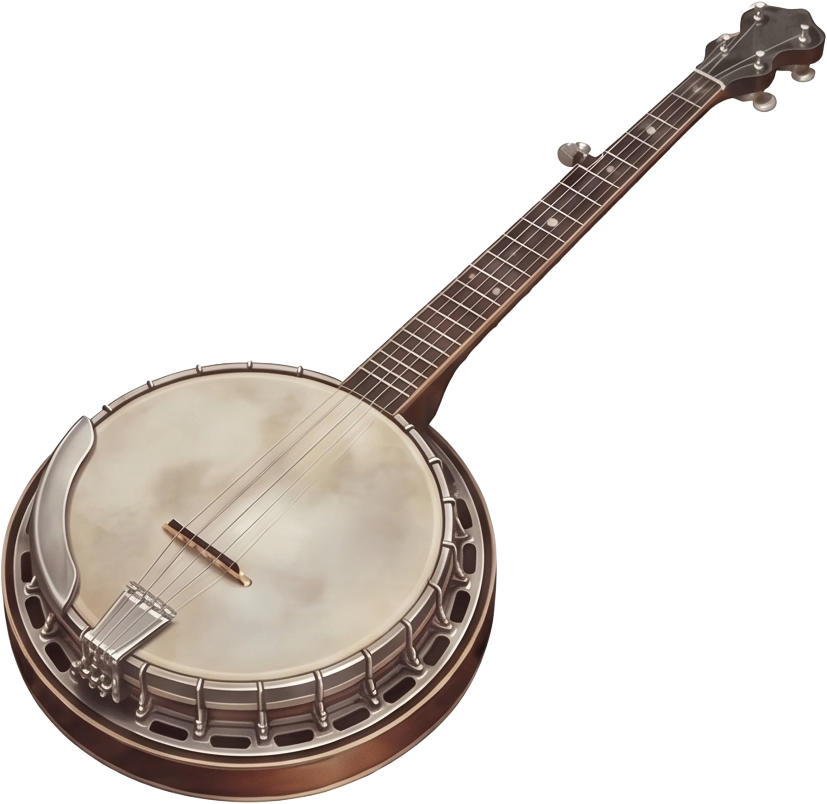
Plucked string instrument
The sound of the banjo is sharp, dry, staccato, with a characteristic metallic clatter and very short sustain. This allows for incredibly fast, machine-gun passages (Scruggs style) that do not blur into a sonic mess.
Its defining feature is the body, consisting of a round wooden or metal rim over which a membrane (plastic or skin) is stretched like a drum. The five-string banjo features a unique short fifth string attached midway up the neck that serves as a permanent drone.
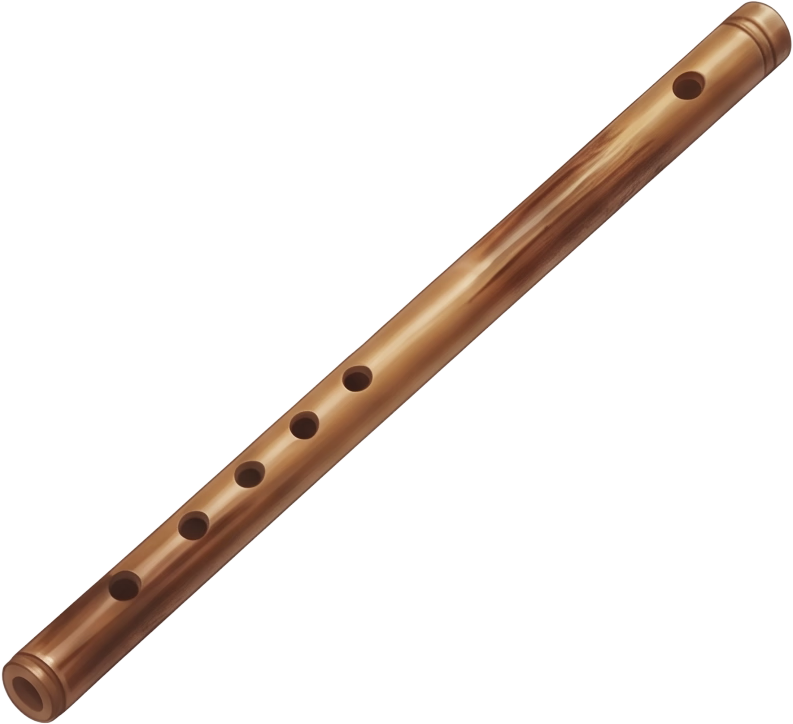
Solo wind instrument
The sound of the bansuri is incredibly warm, breathing, enveloping, and deeply meditative. Because the flute has no mechanical keys (only open finger holes), the musician controls the sound exclusively through breath and lip movement, giving the melody a living, vocal quality.
The instrument is made from special varieties of lightweight yet durable bamboo. A classic bansuri typically has 6 to 7 finger holes, and its length can reach up to a meter, allowing for deep bass notes.
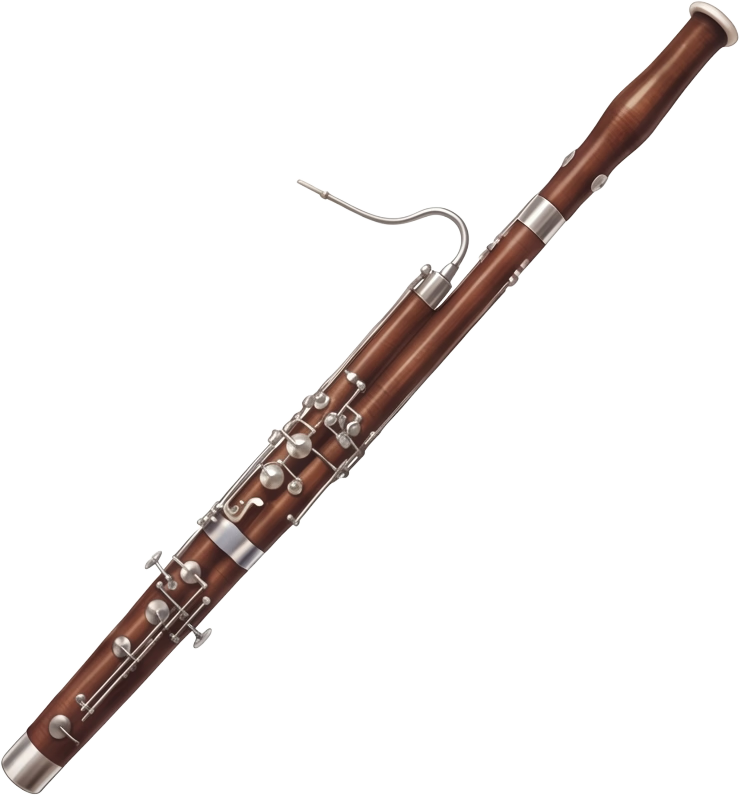
Bass woodwind instrument
The sound of the bassoon in the lower register is thick, buzzing, and dense; in the middle it is muted and noble; and in the upper register it is tense and poignant. Stravinsky used a high bassoon solo in The Rite of Spring to evoke the awakening of the ancient earth.
A long wooden tube (about 2.5 meters) folded in half in a U-shape for comfortable handling by the musician. Attached to it is a curved metal tube (bocal) holding a double reed.
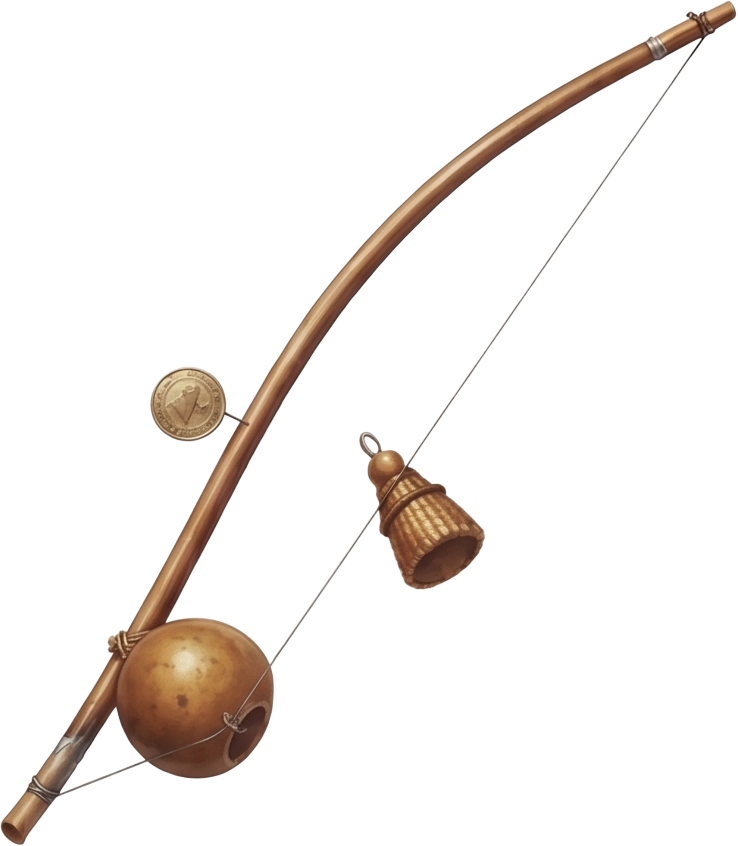
Single-string percussion musical bow
The sound of the berimbau is hypnotic, ringing, with a characteristic metallic buzz and the ability to change pitch by a half-step using a small stone or metal coin.
A flexible wooden branch with a stretched steel wire (taken from an automobile tire). A hollow calabash gourd is attached to the base of the arch to act as a resonator. The musician holds the instrument with one hand, striking the string with a thin wooden stick while simultaneously pressing a small stone against it, and holds a small noise shaker (caxixi) in the other hand.
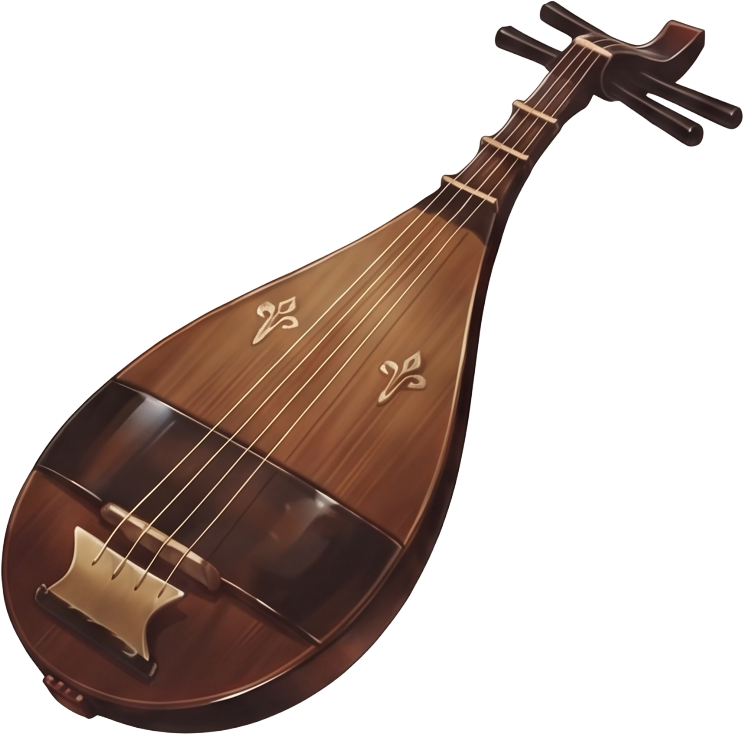
Epic plucked string instrument
The sound of the biwa is sharp, percussion-like, dry, and dramatic. It is played with a massive wooden plectrum (bachi), which is often struck not only against the strings but also against the wooden soundboard, creating powerful noise and rhythmic accents.
A pear-shaped body made of solid wood with a strongly back-curved pegbox. High frets (usually 4 or 5) are located on the short neck, allowing for both fixed notes and microtonal bends under strong string tension.
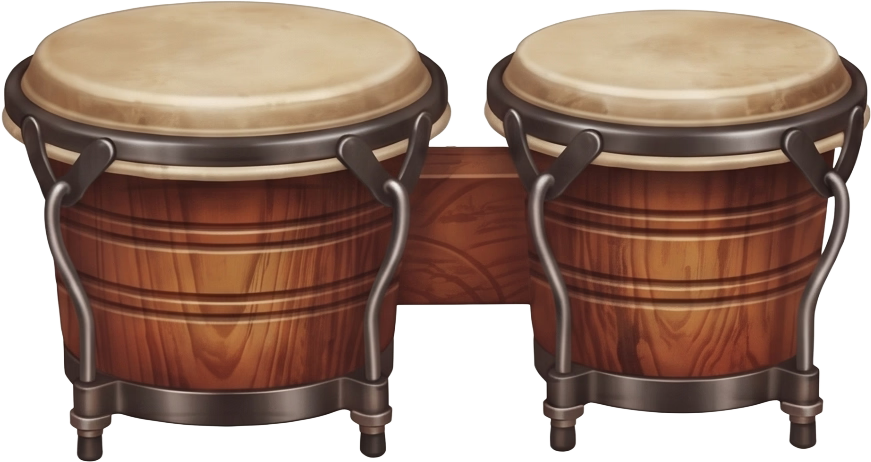
Paired percussion instrument
The sound of bongos is high, dry, clicking, and piercing. The small drum (macho) sounds very high, while the large drum (hembra) sounds slightly lower. They are ideal for crafting high-speed rhythmic patterns with the fingers.
Two small wooden cylinders of different diameters, open at the bottom, rigidly connected to each other by a small wooden plank. The membranes are traditionally leather, tunable with metal screws.
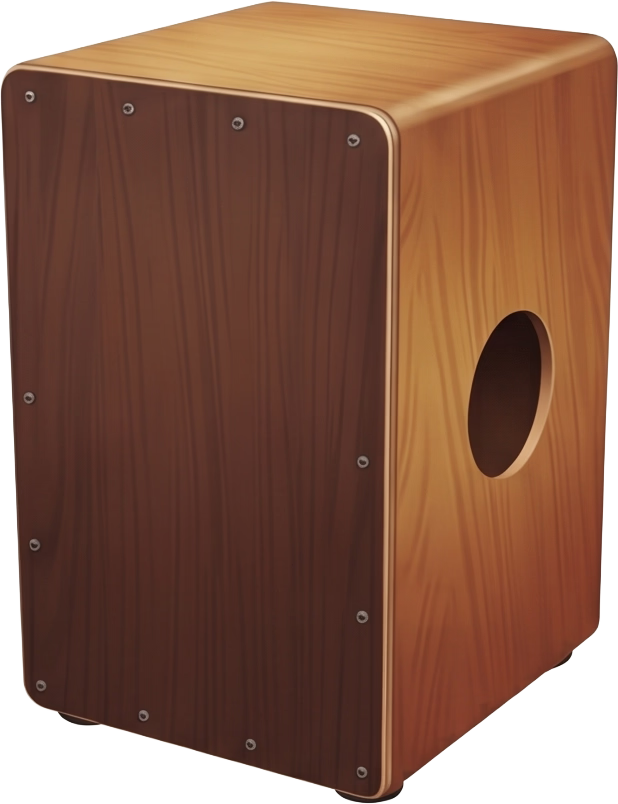
Percussion instrument (drum kit substitute)
The cajón is an acoustic drum kit in a single box. Striking the center of the front panel produces a thick, barrel-like bass (kick), while strikes on the top corners yield a dry, snapping sound that substitutes for a snare drum.
It is a rectangular plywood box with a round sound hole on the back. The front panel (tapa) is made of thinner plywood. Inside, pressed tightly against the tapa, are guitar strings or special snares that create a characteristic sandy rattle upon impact. The musician sits directly astride the instrument.
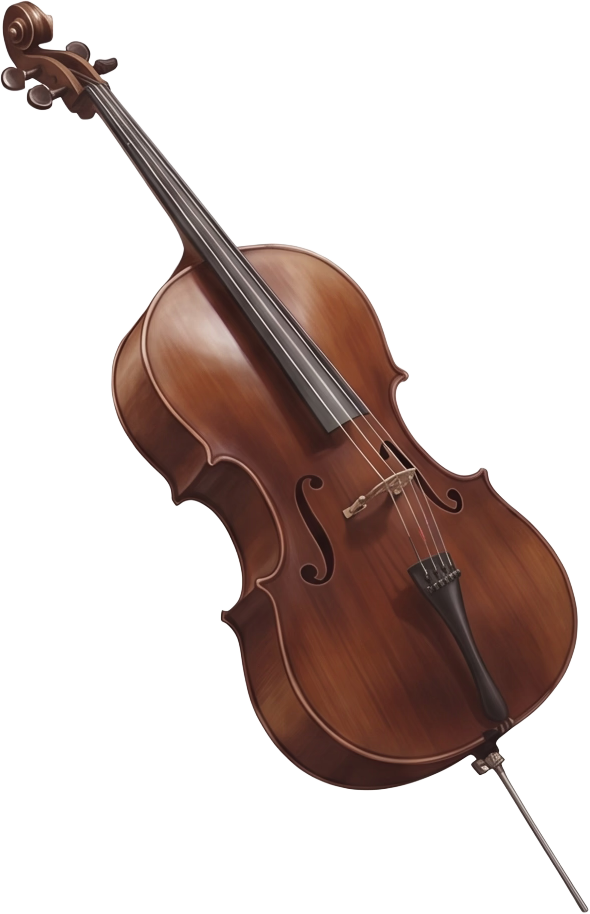
Bowed solo instrument
The timbre of the cello is velvety, rich, deep, and extraordinarily singing. It possesses a powerful chest resonance capable of evoking deep emotional resonance in the listener.
Similar in construction to a violin, but significantly larger. When playing, the musician sits, resting the instrument on the floor via a specialized metal endpin, and draws a heavy bow across the strings.
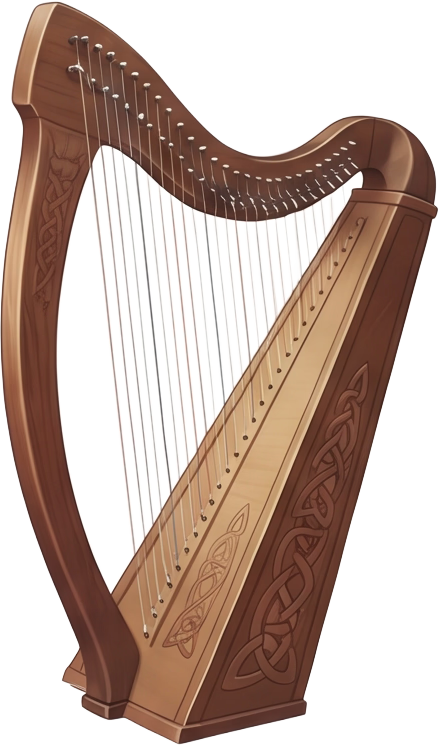
Plucked string instrument
The sound of the Celtic harp is magical, transparent, silvery, and very warm. Due to lower string tension than a symphonic harp, its tone is softer and ringing, associated with elven magic, nature, and fairy tales.
It features a characteristic triangular shape with a curved pillar. It consists of a soundbox and a tuning frame strung with 22 to 38 strings (made of nylon or gut). A key feature is the levers (small switching blades on each string) that allow the string pitch to be raised by a semitone during performance.
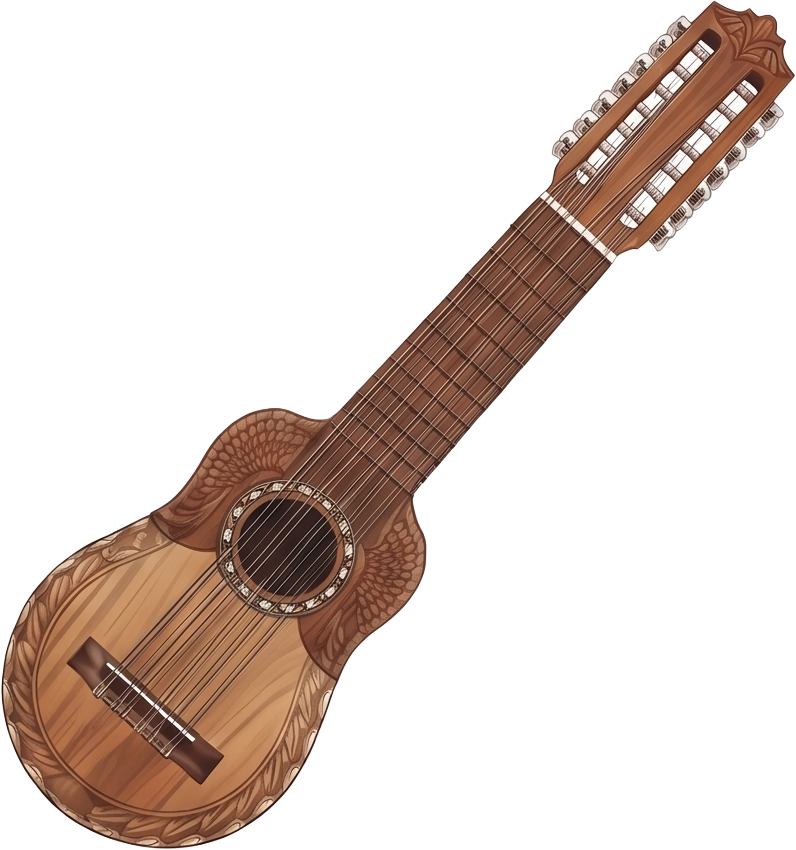
Mini plucked string instrument
The sound of the charango is very high, ringing, dry, crackling, resembling a mandolin or ukulele with a bright ethnic flavor.
The traditional charango body was made from a dried armadillo shell (today, for ecological reasons, a carved wooden body is more commonly used). 10 strings grouped into 5 pairs are stretched across the short neck.
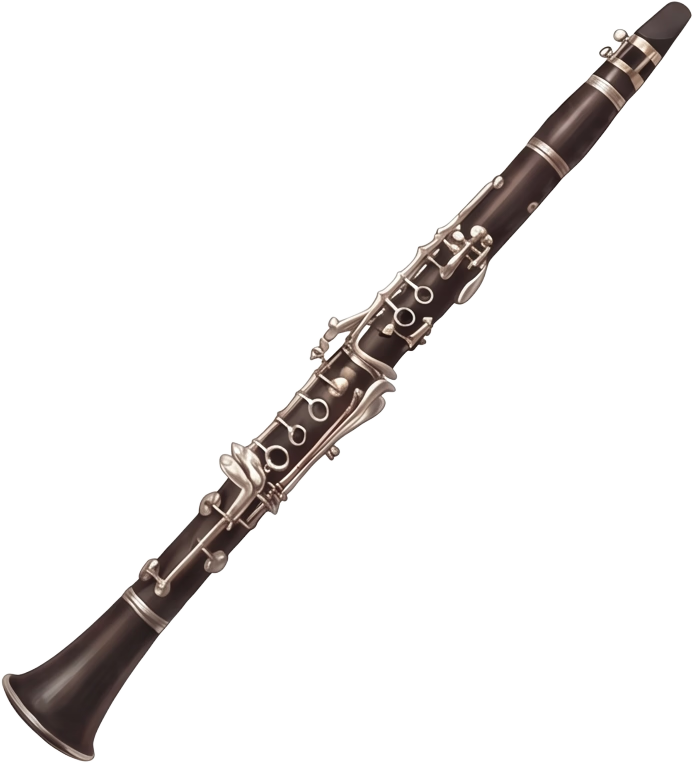
Woodwind instrument
The clarinet boasts an extraordinarily wide range: down low it sounds thick, velvety, and ominous, while up high it sounds bright, light, and silvery. Its timbre is distinguished by an unusual smoothness of legato.
A cylindrical tube made of precious wood (or plastic) featuring a mouthpiece equipped with a single reed. It has an elaborate key system for altering pitch.
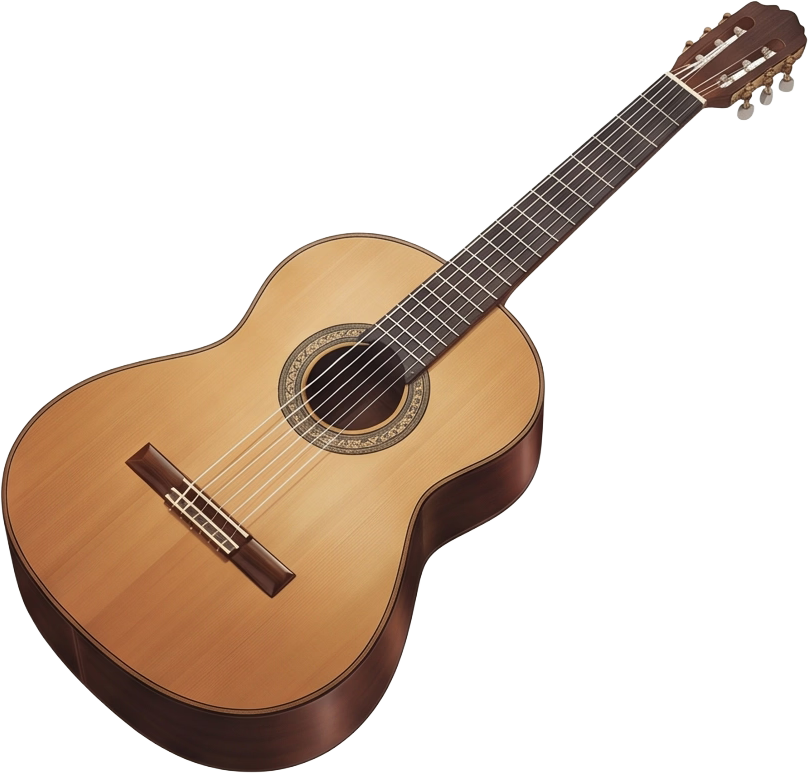
Plucked string solo and accompanying instrument
The sound of the classical guitar (with nylon strings) is soft, rounded, warm, and intimate. It is capable of sounding both passionate and percussive (in the flamenco style, with soundboard strikes) as well as melancholic and lyrical like a miniature orchestra.
Figure-eight shaped body (spruce or cedar top, rosewood back and sides). Wide flat neck without radius, 19 metal frets. Strung with 6 strings (nylon today, gut historically). Played using fingerstyle technique (without a pick).
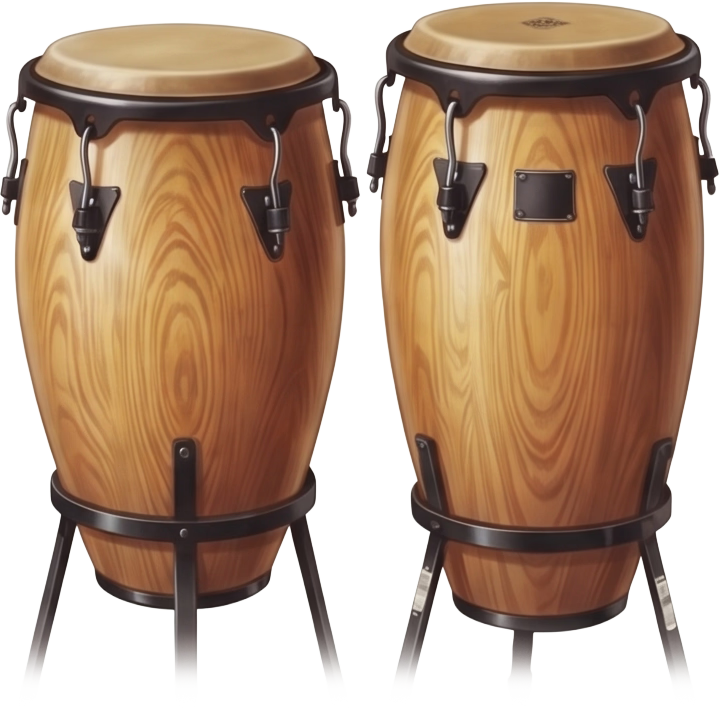
Percussion ensemble instrument
Congas deliver a deep, rich bass in the center and ringing, snappy open or muted strikes on the rim. They create a dense, driving dance groove.
A tall barrel-shaped wooden or fiberglass body tapering downward. A thick cowhide or plastic membrane with a mechanical tuning system using screws is stretched across the top. Congas are played with bare hands.
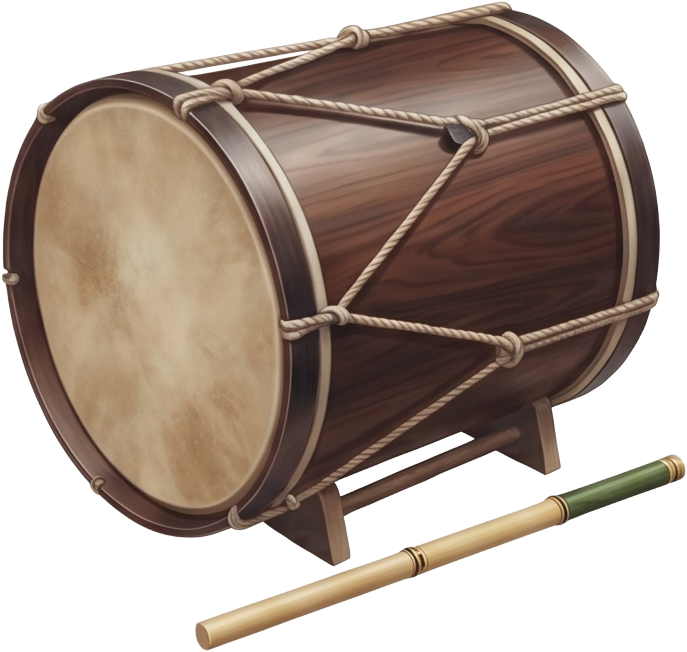
Friction percussion instrument
The sound of the cuica is squeaky, nasal, high-pitched, rhythmic, and unexpectedly “alive,” resembling a monkey’s screech or a frog’s croak.
A metal or wooden cylinder with a leather membrane stretched over its lower part. A thin bamboo rod hangs from the center of the membrane into the interior of the cylinder. The musician rubs the outside of this rod with a damp cloth or finger, causing the membrane to vibrate, while pressing their finger on the membrane next to the rod with the other hand to change the pitch.
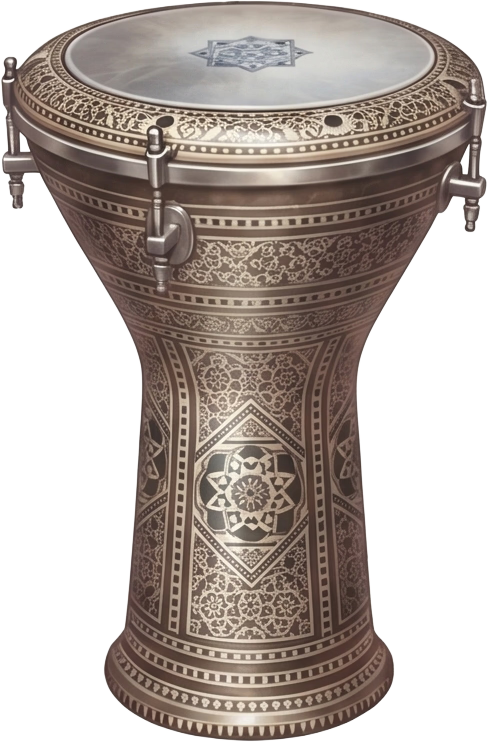
Solo percussion instrument
The darbuka produces a very wide spectrum of sounds: from a deep, resonating bass (dum) in the center to a sharp, high, piercing snap (tek) at the rim. Virtuoso performers play complex polyrhythmic lace patterns on it at lightning speeds.
The drum has a goblet shape. Classic darbukas are made of clay with a fish skin head, while modern ones are crafted from aluminum or copper with a synthetic plastic head, making the sound sharper and independent of humidity. It is played with the fingers of both hands.
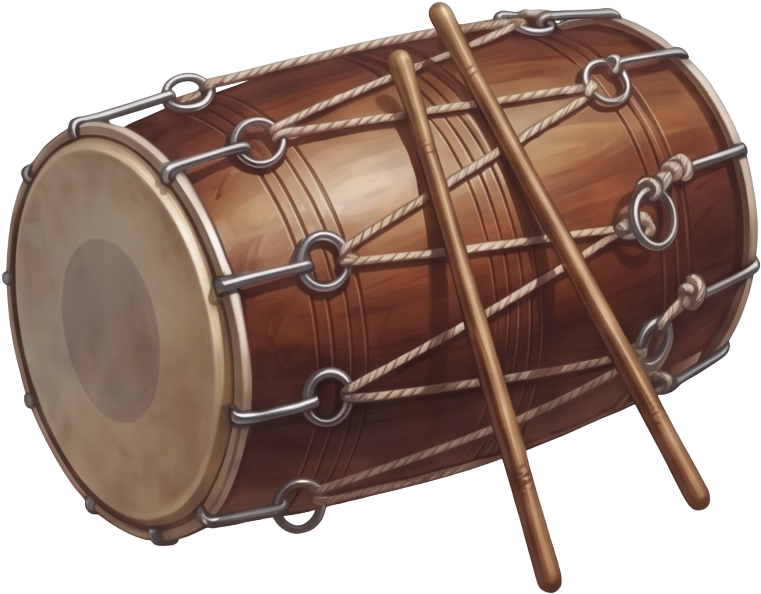
Double-headed bass percussion instrument
The sound of the dhol is rolling, thick, thunderous, and incredibly energetic. Due to the differential tension of the membranes, one side delivers a deep, dense bass, while the other provides a high snapping accent, allowing a single instrument to act as a full rhythm section.
The body of the dhol is carved from a solid block of mango or shisham wood into a barrel shape. The membranes are made from animal skin (often goat or buffalo) and tensioned using a system of ropes or straps with steel rings for tuning.
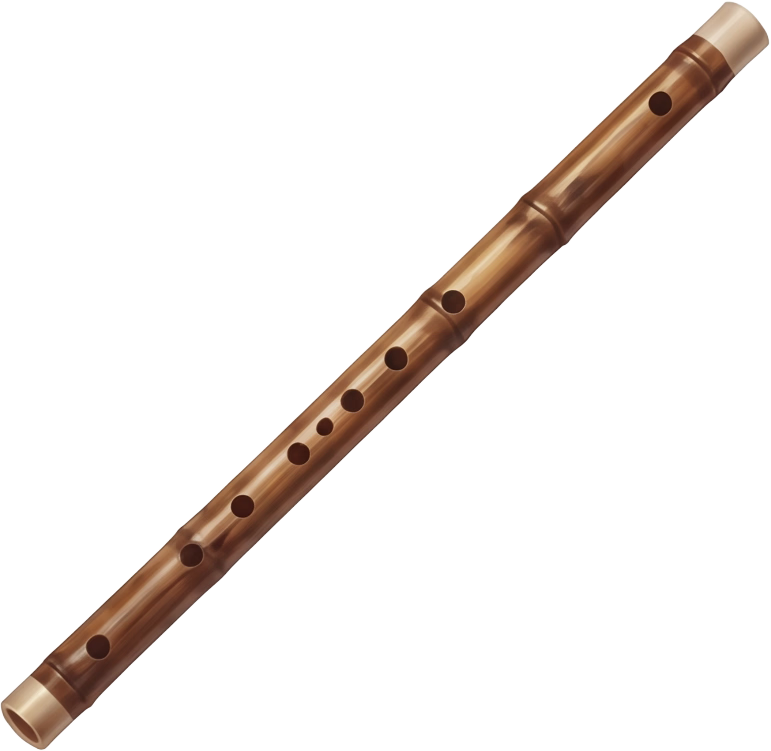
Solo and orchestral wind instrument
The sound of the dizi is piercing, silvery, light, and festive. The vibrating bamboo membrane adds rich upper harmonics to the sound, making the flute sound as if a breeze or birdsong in a spring forest is caught inside.
The flute is made from a single stalk of bamboo. Aside from the blowing hole and 6 finger holes, it features the crucial membrane hole located between the embouchure and the finger holes, requiring precise tuning of the film tension.
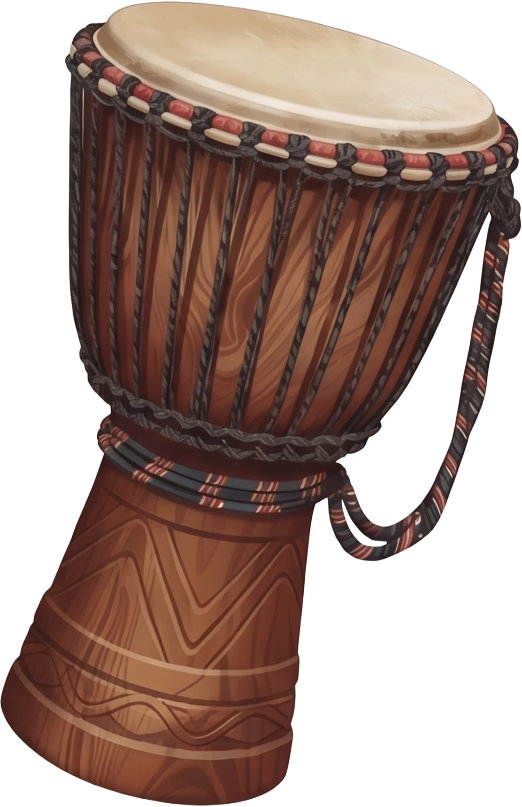
Percussion instrument, rhythm leader
The djembe boasts an enormous dynamic range. In the center, it delivers a deep, powerful bass, while rim strikes produce deafeningly sharp, high slaps. It is an instrument of fire, trance, and pulsing life energy.
The goblet-shaped body is hand-carved from a single piece of hard African wood. Goatskin is stretched across the wide top using a complex system of durable rope interlacings that allows the instrument to be tuned to very high tension. The djembe is played with bare hands.
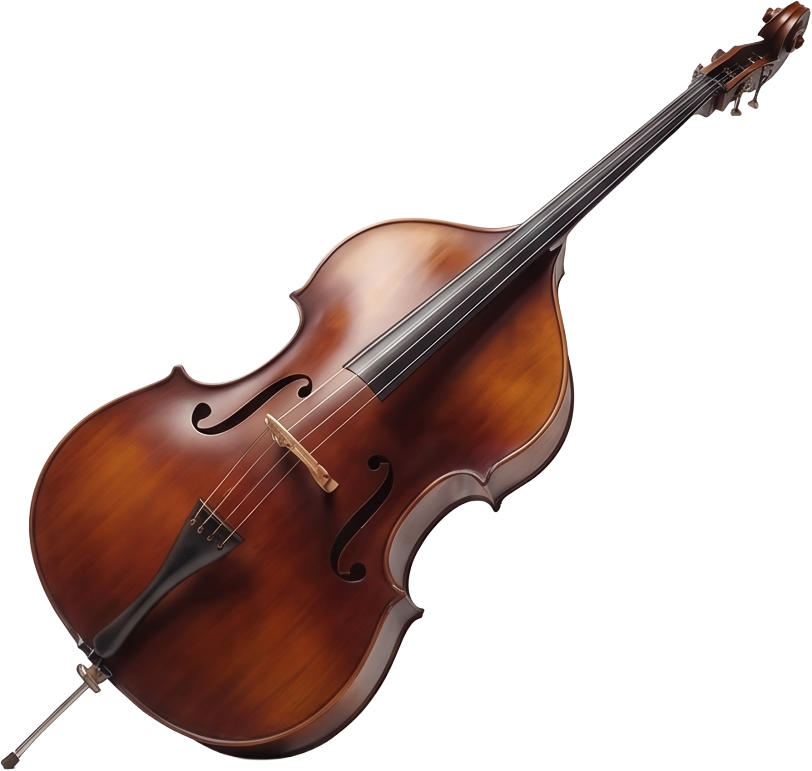
Bowed bass instrument
The sound of the double bass is deep, massive, thick, and enveloping. It provides the foundational “bass” supporting the entire orchestral or jazz texture. In jazz, it is frequently played pizzicato (plucked), driving a swinging groove.
A massive wooden body approximately 2 meters tall. It is strung with 4 thick strings (tuned in fourths: E, A, D, G). The musician plays standing or sitting on a high stool, using a heavy bow or fingers.
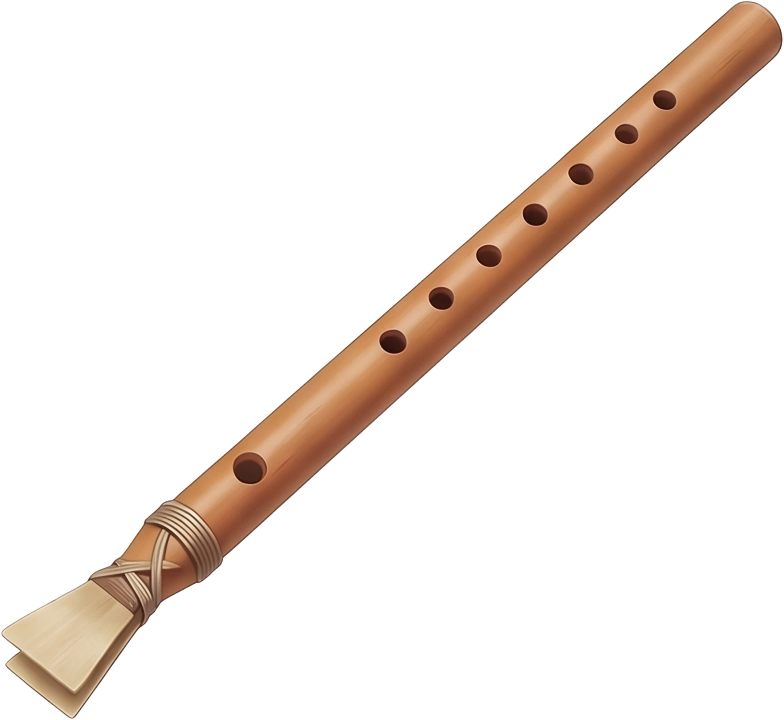
Solo wind instrument
The sound of the duduk is deep, warm, velvety, and piercingly sad. It is remarkably close to the human voice. Duduk music is associated with eternity, mountains, sorrow, and deep spiritual silence.
The instrument consists of a wooden tube (strictly made of apricot wood) with 8 fingerholes on the front and 2 on the back. The key component is a massive double reed (ramad) made of cane, which vibrates when air is blown. Duduks are typically played in pairs: one leads the melody while the other maintains a continuous background drone (dam).
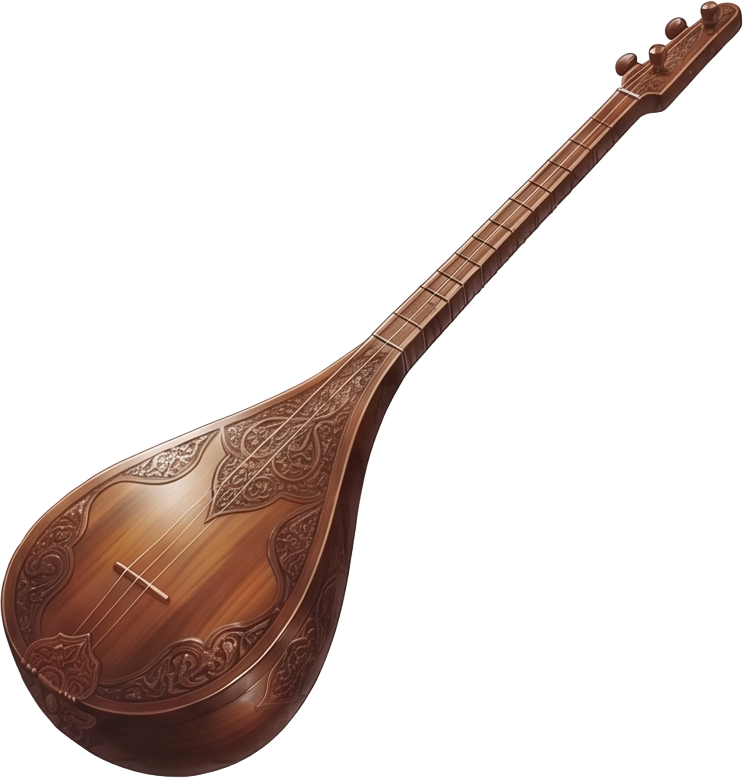
Plucked string instrument
The sound of the dutar is warm, soft, velvety, calming, and deeply acoustic. Since the strings were traditionally made of silk and played with alternating downward and upward finger strokes, the instrument lacks a sharp attack, creating a smooth, rippling texture.
The pear-shaped body is assembled from thin wooden ribs (often mulberry), transitioning into a very long thin neck with numerous frets. Only two silk (or nylon) strings are strung.
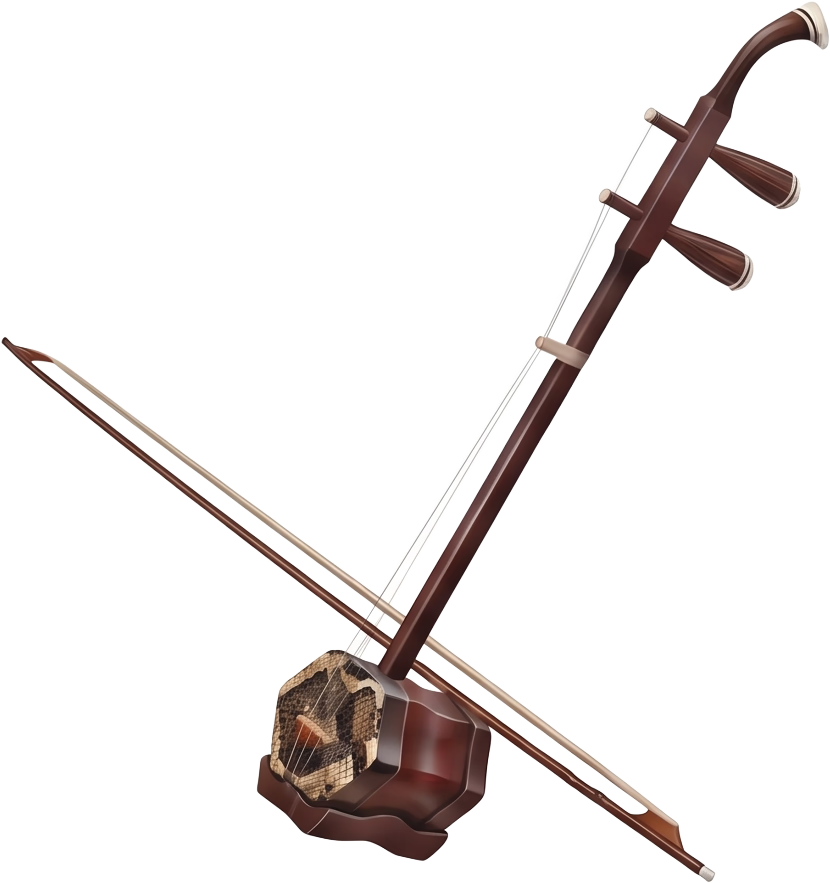
Bowed solo instrument
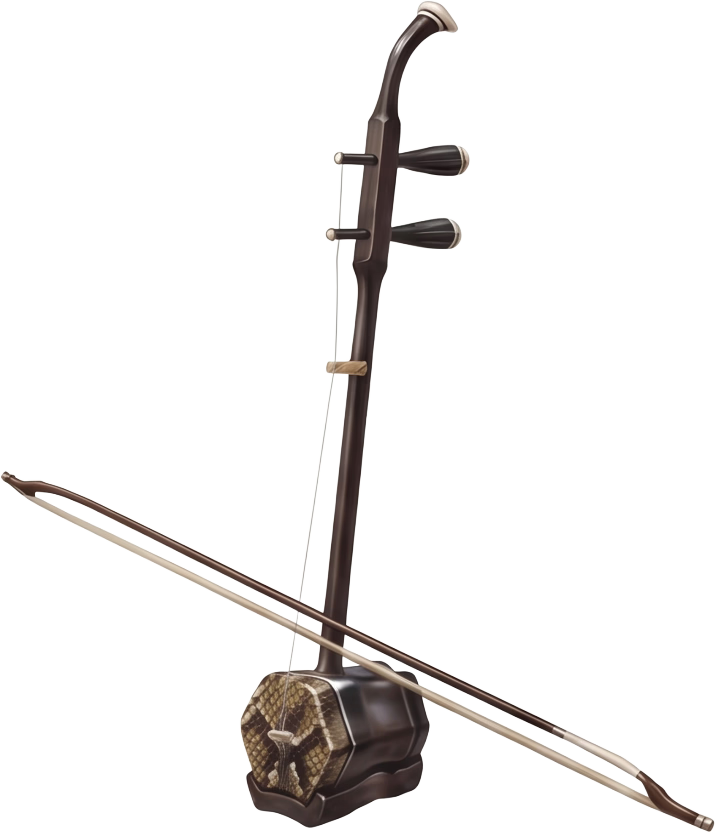
The sound of the erhu is incredibly expressive, penetrating, and closest in timbre to the human soprano or alto voice. Because there is no mechanical separation between the bow and strings (the bow hair passes between the two strings), the instrument features seamless legato and deep vibrato.
The construction of the erhu is minimalist: a small hexagonal or round resonator is covered with python skin, and the long wooden neck has no frets. The bow is made of bamboo and horsehair, which remains permanently woven between the strings.
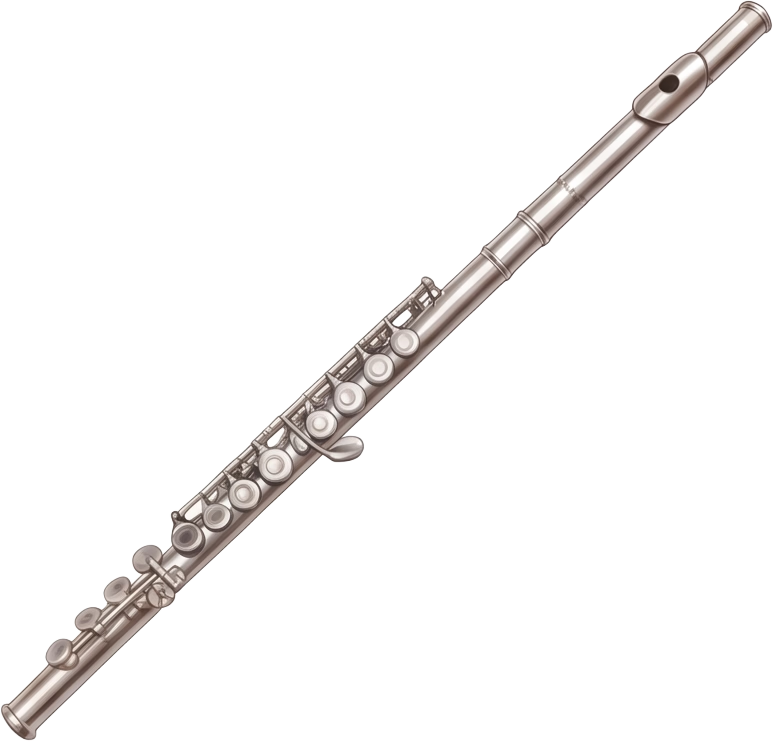
Orchestral wind instrument
The sound of the flute is silvery, soaring, light, airy, and virtuosic. It effortlessly hovers over the entire symphony orchestra, reminiscent of birdsong or whistling wind.
Today’s classical orchestral flute is crafted from silver, gold, or platinum (though classified as a woodwind due to its sound production principle). The musician blows across the round embouchure hole, splitting the airstream against its edge.
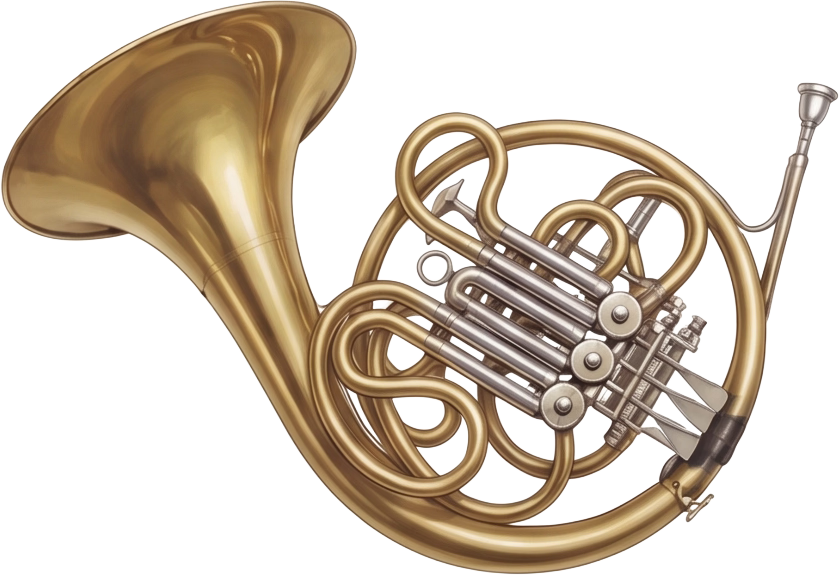
Brass orchestral instrument
The sound of the French horn is warm, velvety, and deep, capable of sounding both triumphal and heroic, as well as melancholic and intimate. It brilliantly bridges the sound of woodwind and brass instruments into a unified whole.
It consists of a long (about 4–5 meters) narrow brass tube wound into a circular shape, expanding toward a wide bell. The musician controls the pitch using three valves (keys) and the right hand, which is held inside the bell to alter timbre and intonation.
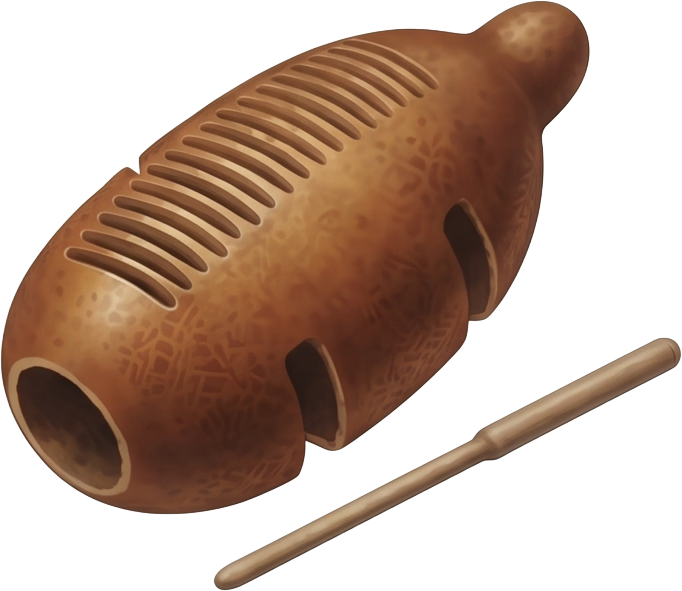
Scraping percussion effect instrument
The sound of the guiro is dry, scraping, rhythmically crunchy, perfectly filling the pauses between drum hits and creating an indispensable dance pulse.
Originally made from a hollow dried fruit of the higuerro gourd with parallel grooves (notches) carved on the surface. Modern versions are made of wood, plastic, or a metal tube. The musician scrapes along the notches using a special comb-like stick (pua).
Philosophical plucked string instrument
The sound of the guqin is quiet, intimate, deep, crystal-clear, and meditative. The instrument produces many different timbres depending on the sound extraction method: open strings sound resonant and bright, stopped strings sound muffled, and harmonics resemble bird songs.
A long, flat wooden body without legs or frets, with just 7 silk strings stretched across it. Mother-of-pearl dots (hui) are inlaid on the soundboard surface to mark the positions of overtones and harmonics.
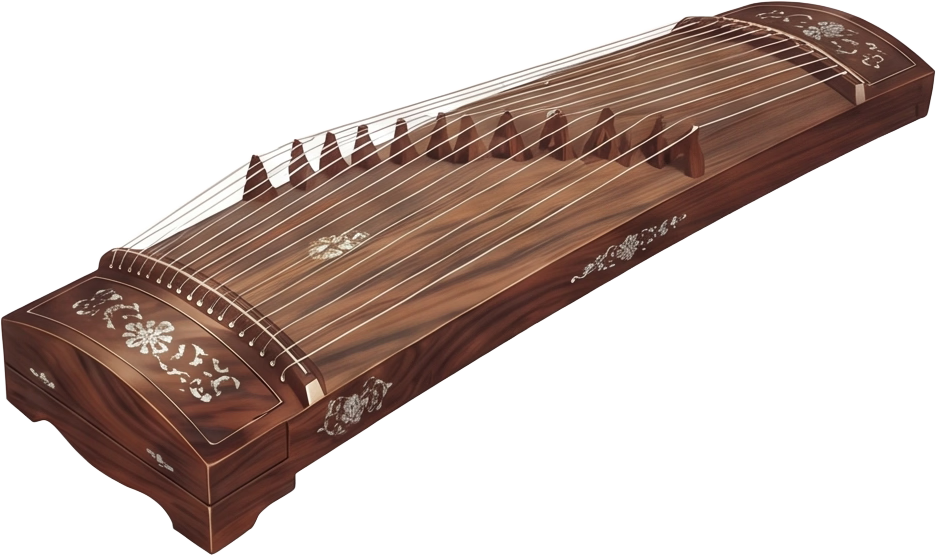
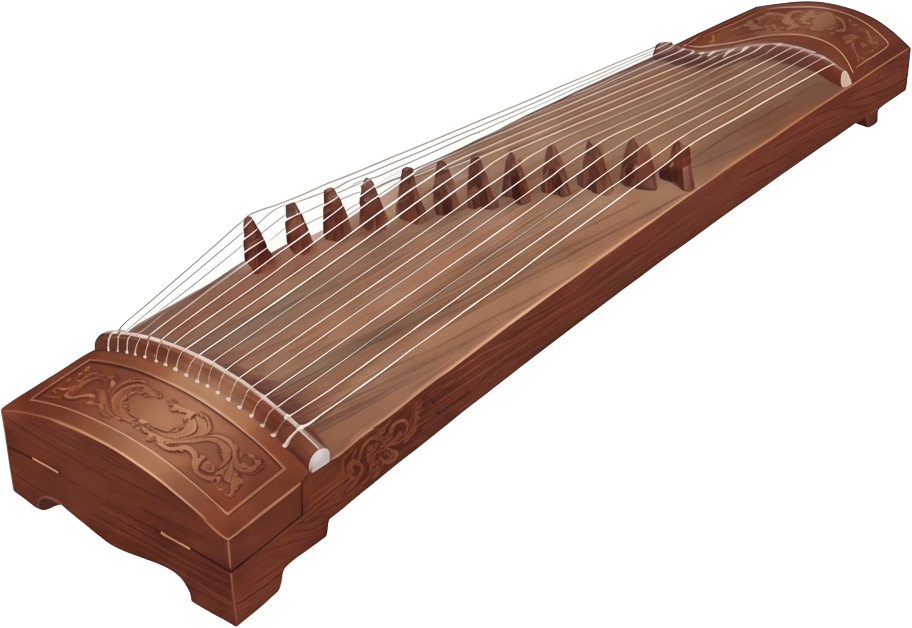
Plucked string academic instrument
The sound of the guzheng is grandiose, bright, shimmering, and deeply atmospheric. Due to its large resonator and individually bridged strings, the instrument can sound tender and watercolor-like, or powerful and sweeping, resembling a mountain waterfall.
A modern guzheng is a massive curved paulownia body about 1.6 meters long with 21 strings. Each string rests on a movable bridge, allowing precise tuning to pentatonic or diatonic scales.
Bowed solo instrument
The timbre of the haegeum is piercing, crying, with a strong hoarseness and colossal expression. It is capable of conveying both deep melancholy and piercing joy, resembling a human voice or the howling of the wind.
It features a vertical hollow wooden resonator (originally made of bamboo or a hollow gourd), open at the back, and a long, thin fretless neck. A horsehair bow passes between two silk strings.
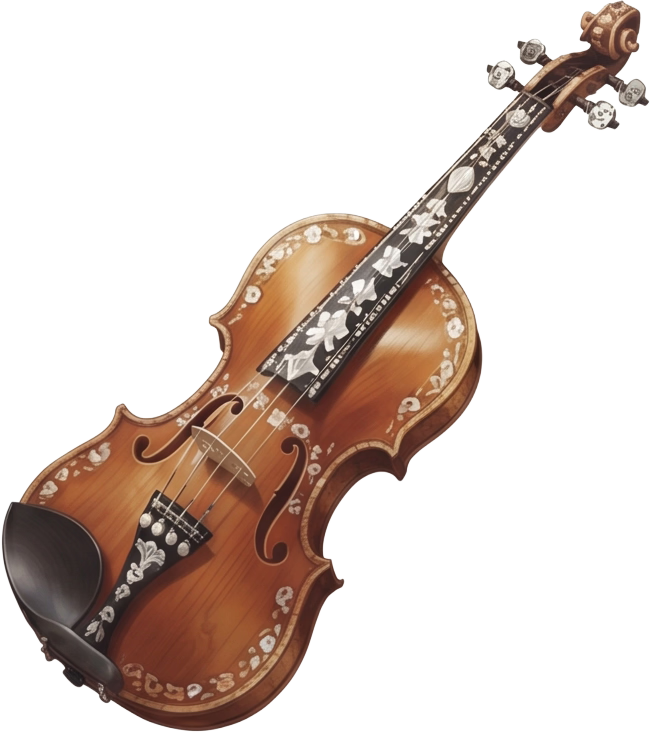
Bowed folk instrument
The sound of the Hardanger fiddle is bright, ringing, metallic, and multi-layered. Due to the resonating strings, it seems as though the violin is playing in a permanent natural echo or chorus, perfectly conveying the severe beauty of northern nature.
Externally similar to an ordinary violin, but rich in traditional wood carving and mother-of-pearl inlay. The main difference is that beneath the main 4 strings, another 4 to 5 resonating (sympathetic) strings are stretched, which vibrate on their own.
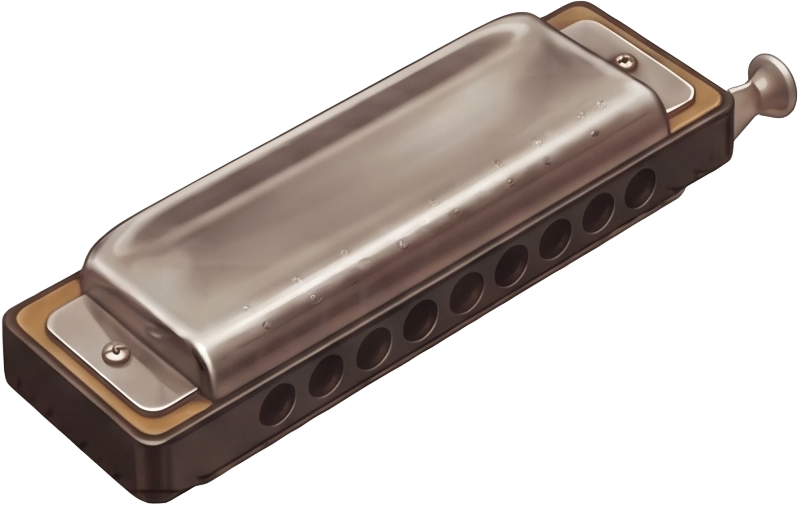
Free-reed wind instrument
The sound of the harmonica is weeping, plaintive, piercing, or spirited. Utilizing specialized breath techniques and pitch bends, a musician can produce the famous “blues cry” resembling a human voice.
A small body (comb) made of wood, metal, or plastic housing brass reeds mounted on plates. On a diatonic harmonica, drawing and blowing into the same hole produces different notes.
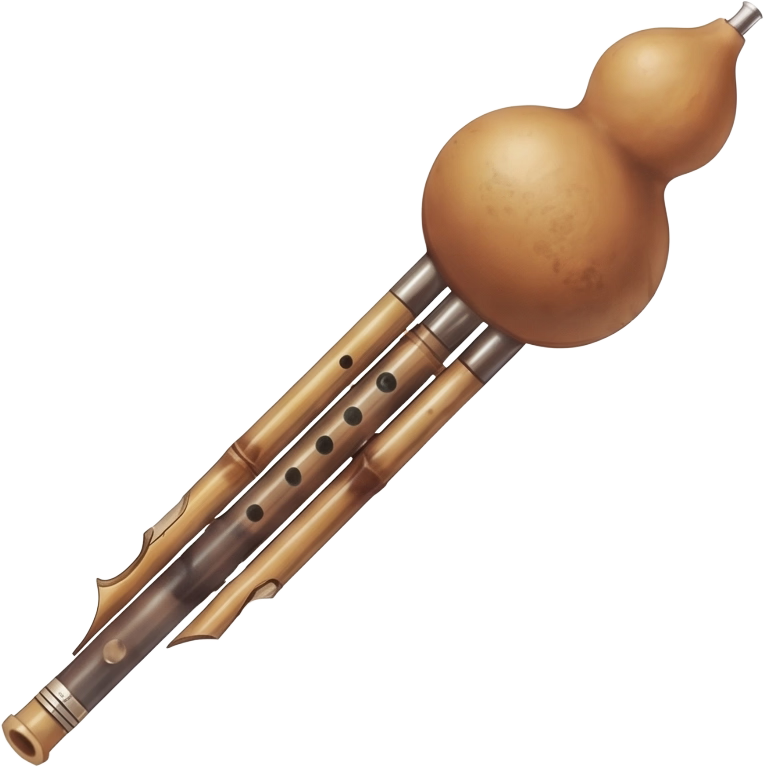
Melody wind instrument with drone
The sound of the hulusi is gentle, nasal, warm, and enveloping, reminiscent of the sound of a clarinet or a soft bagpipe. Thanks to its side tubes, the instrument produces a constant harmonic accompaniment (drone) while playing.
The main resonator is made from a natural dried bottle gourd. Three bamboo tubes are inserted into it: a central one (with playing holes for the melody) and two side ones (responsible for the constant bass background). Inside each tube is a hidden metal reed.
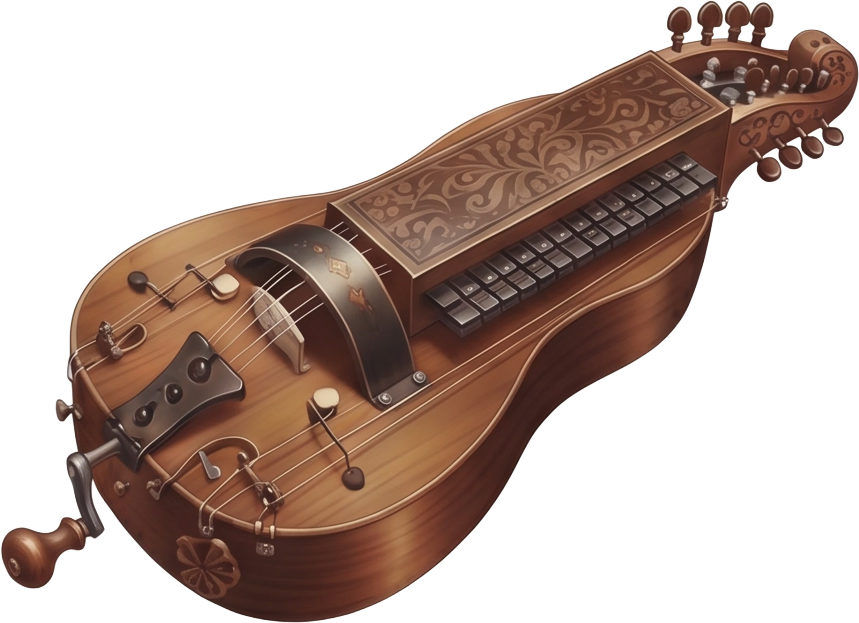
Solo and accompanying string instrument
The sound of the hurdy-gurdy is droning, continuous, and slightly nasal (resembling bagpipes). A rotating wooden wheel acts as an infinite bow. The melody sounds over a constant drone bass, and a special mechanism (the “dog”) allows the player to strike a distinct rhythm when accelerating the crank rotation.
The body resembles a violin or lute. The musician turns a handle with their right hand, which rotates a rosin-coated wooden wheel (the bow) rubbing against the strings. With their left hand, they press keys that push small wooden tangents against the melody strings, changing the pitch.
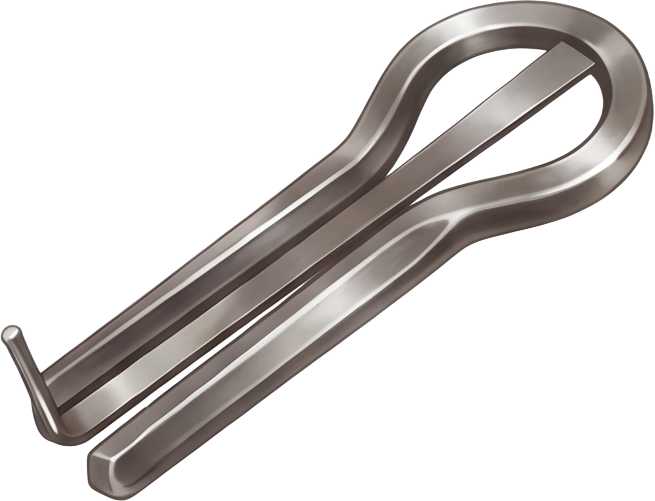
Overtone rhythmic instrument
The sound of the jaw harp is a cosmic buzzing, pulsation, and a rich spectrum of overtones. By altering articulation, lip shape, tongue position, and breathing, the musician extracts different notes from the baseline drone, acoustically creating hypnotic “electronic” effects.
It consists of a small metal (or wooden) frame with a flexible tongue fixed in the middle. The instrument is pressed against the teeth or lips, and a finger plucks the tip of the tongue, causing it to vibrate.
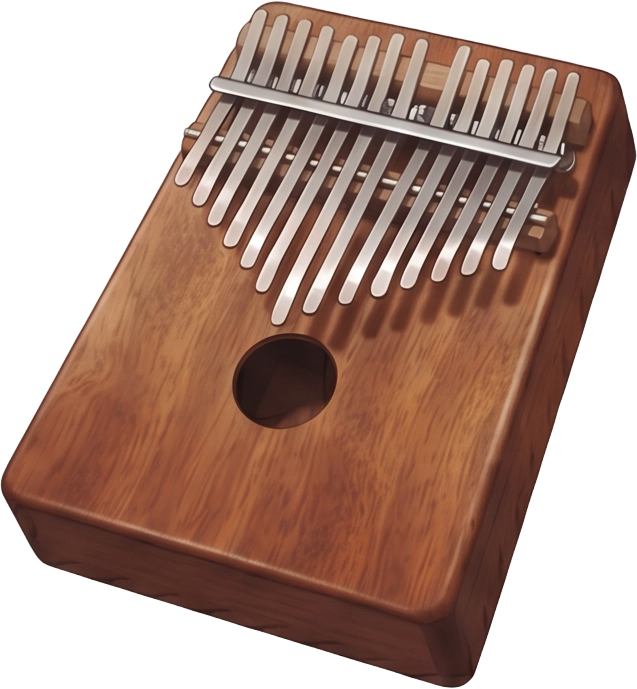
Melodic percussion instrument
The sound of the kalimba resembles a musical box chime—crystal clear, dripping, soothing, and fragile. The instrument generates soft overtones with proven relaxing and therapeutic effects.
It consists of a wooden body (often hollow with a sound hole) and a row of metal keys (lamellae) of varying lengths fixed to a bridge. The kalimba is played by plucking the keys with the thumbs of both hands.
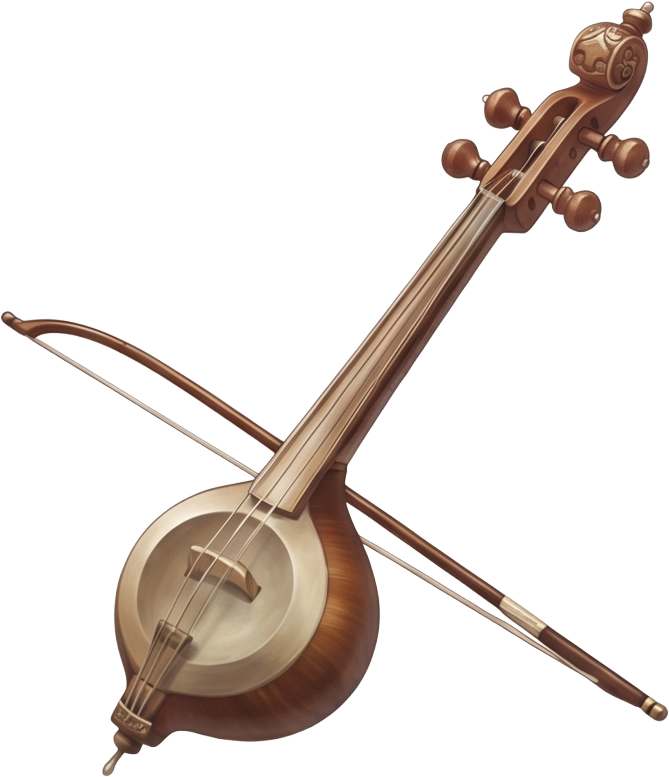
Bowed solo instrument
The timbre of the kamancheh is piercing, velvety, deeply melancholic, and soaring. The design features allow the musician to rotate the instrument around its axis while playing, easily changing strings under the bow.
It features a round (spherical) wooden or gourd body covered with a thin fish skin or membrane. A long straight fretless neck holds 4 strings. The instrument rests on an iron spike that abuts the floor or the musician’s knee.
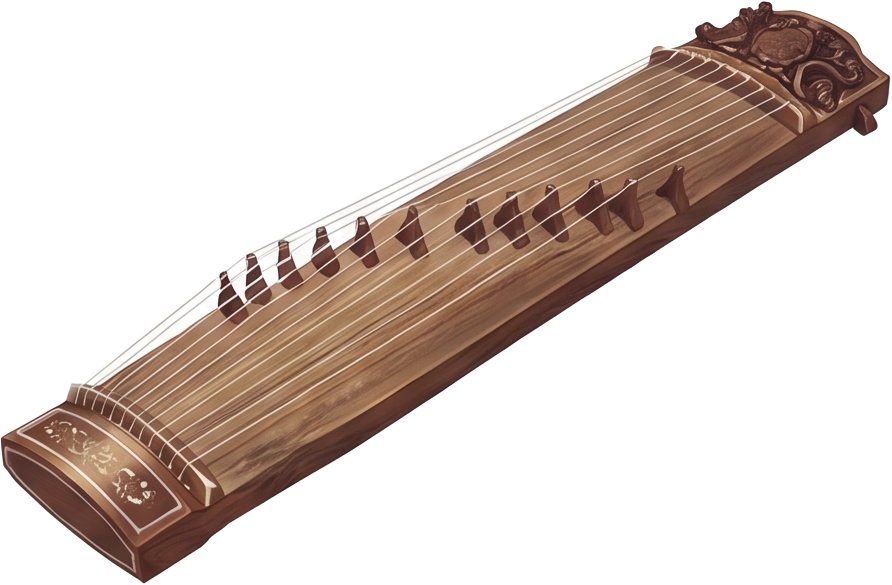
Academic plucked string instrument
The sound of the kayagum is deep, warm, lyrical, and soft. Unlike the Japanese koto, the strings of the kayagum are tensioned more loosely, and the musician can strongly pull and vibrate the string with their left hand behind the bridge while playing, achieving unique deep pitch bends.
A long hollow body made of paulownia wood, featuring 12 (in modern versions — up to 21 or more) silk or synthetic strings resting on movable “goose-foot” shaped bridges.
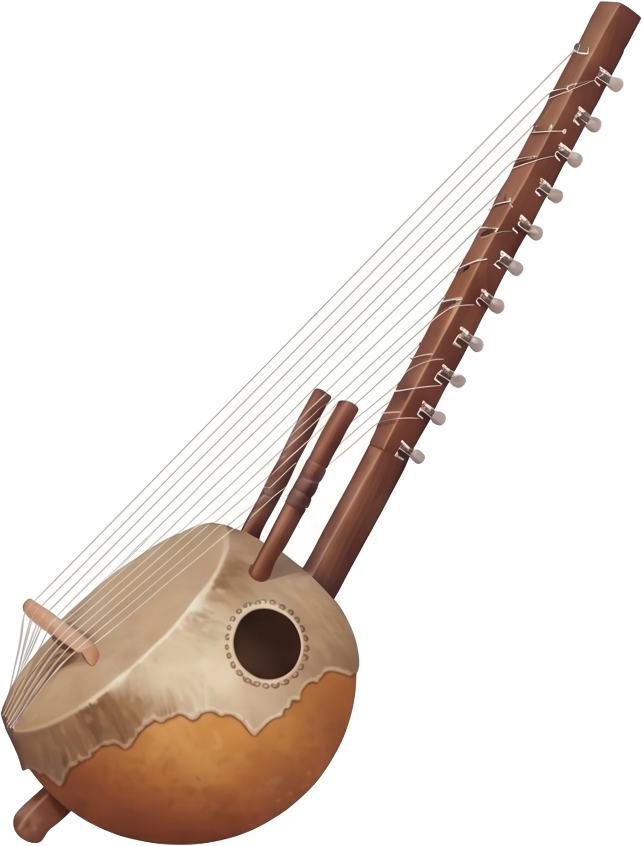
Plucked string instrument (harp-lute)
The sound of the kora is a blend of the Celtic harp and flamenco guitar. It is fluid, cascading, transparent, and incredibly virtuosic. An experienced performer can simultaneously carry a complex bassline, rhythmic accompaniment, and improvise a melody.
The resonator is a giant dried half-gourd (calabash) covered with cow or antelope skin. A long neck passes through it, upon which 21 strings are stretched using leather rings (the left hand plays 11 strings, the right plays 10). The musician plays using only thumbs and index fingers.
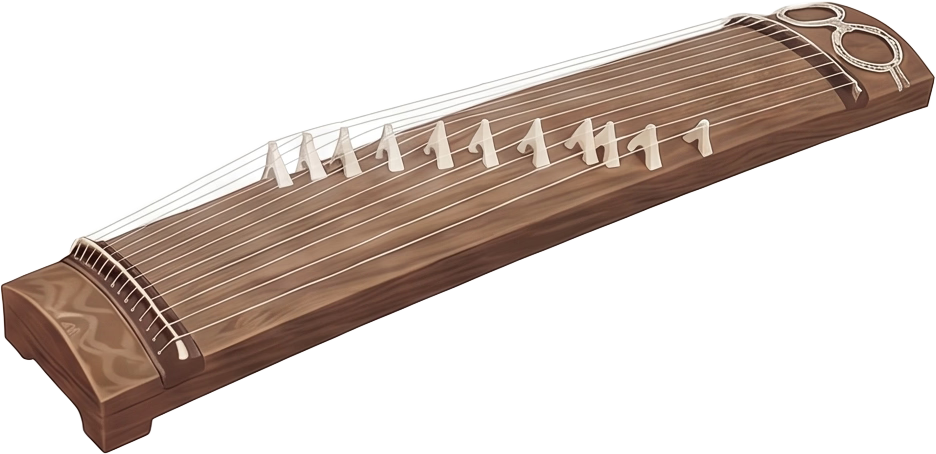
Plucked string solo instrument
The sound of the koto is crystal clear, with deep wooden resonance and noble, fading overtones. Each string sounds like a drop of water or a falling leaf, creating a unique atmosphere of tranquility and spatial silence.
The instrument consists of a long hollow body made of paulownia wood, strung with 13 silk (or modern synthetic) strings. The pitch of each string is tuned using movable wooden bridges (ji) that the musician shifts before playing.
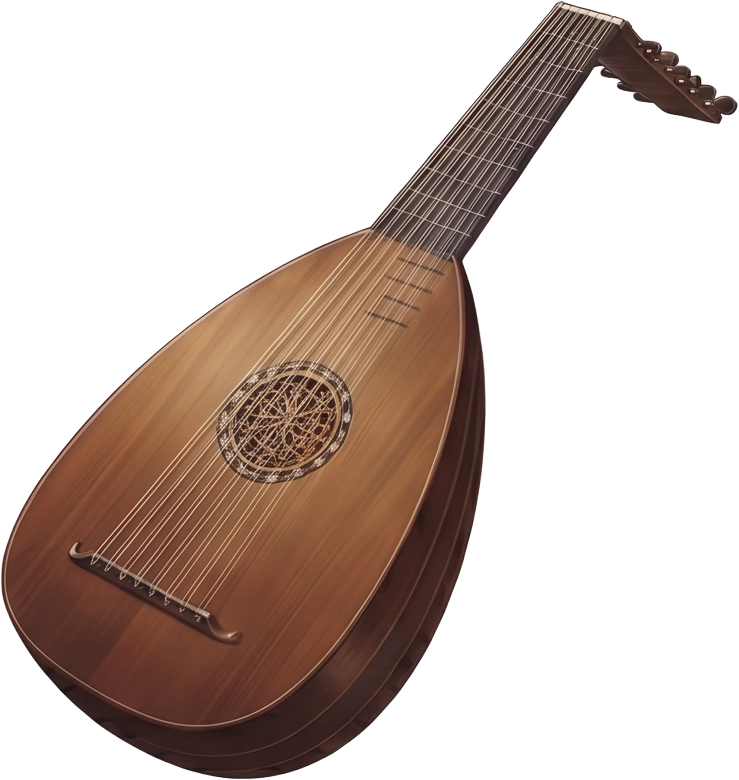
Plucked string instrument
The sound of the lute is intimate, soft, silvery, and noble. Unlike the modern guitar, the lute possesses a quieter yet overtone-rich sound ideal for chamber music and vocal accompaniment.
The lute body resembles a lengthwise-sliced drop or pear, lightweight and assembled from thin wooden ribs. The neck is wide with tied gut frets, and the pegbox is bent backward at a right angle. The number of strings varied from 6 to 13 courses (pairs).
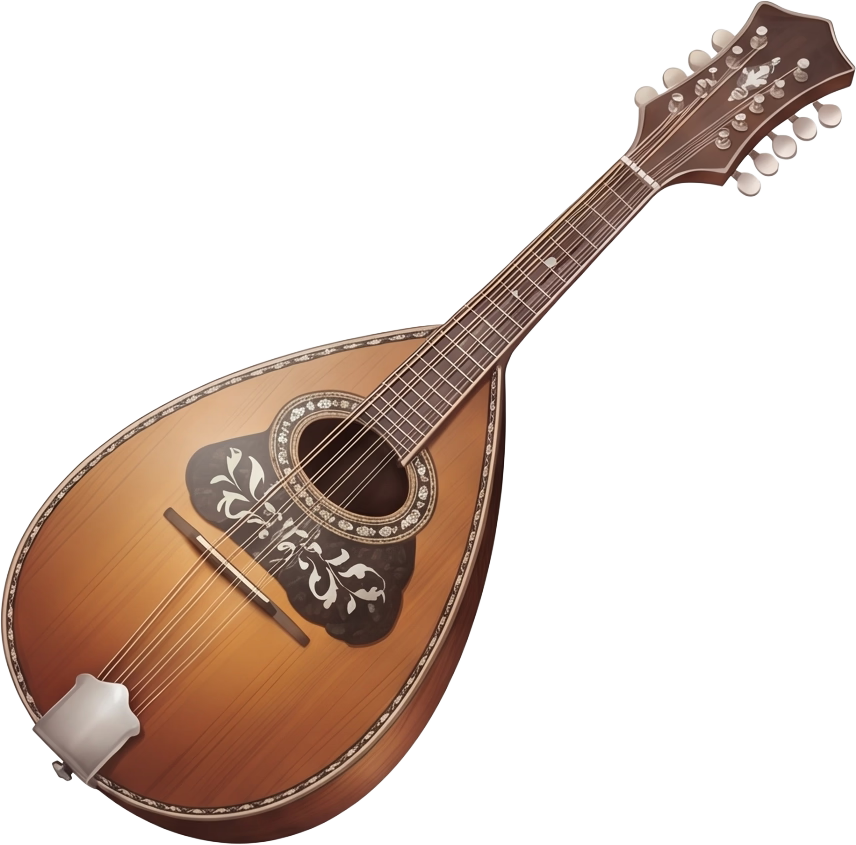
Plucked string instrument
The sound of the mandolin is bright, snappy, and piercingly high. Due to fast sound decay, sustained notes are played using a “tremolo” technique (rapid up-and-down pick movement), creating a characteristic ringing, continuous flow of sound associated with Italian romance.
The classic Neapolitan mandolin features a convex, lute-like body. American versions (for country) often have a flat soundboard. The instrument has 4 pairs (courses) of steel strings tuned like a violin (G, D, A, E). It is played with a plectrum (pick).
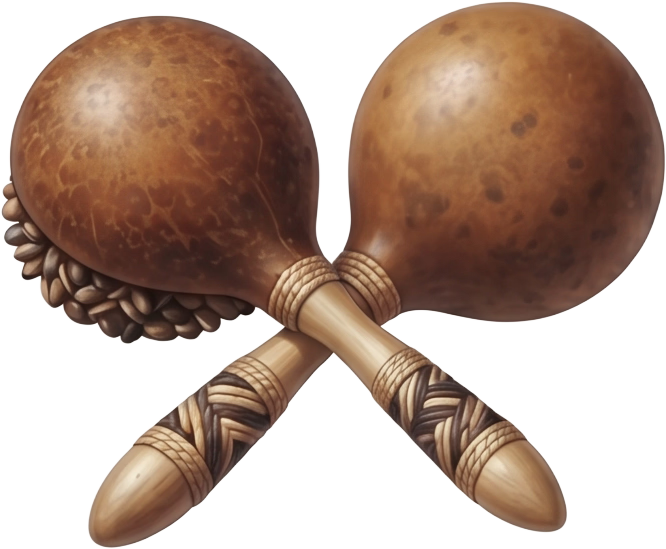
Rhythmic percussion instrument
The sound of maracas is rustling, granular, sharp, and rhythmically precise. With proper technique, they create a continuous pulsing grid (groove) that compels the body to move.
Traditional maracas are made from dried hiegenro (calabash tree) fruits filled with seeds, small pebbles, or beans, fitted with a wooden handle. Modern counterparts are made of plastic or wood. They are always played in pairs (often tuned to slightly different pitches).
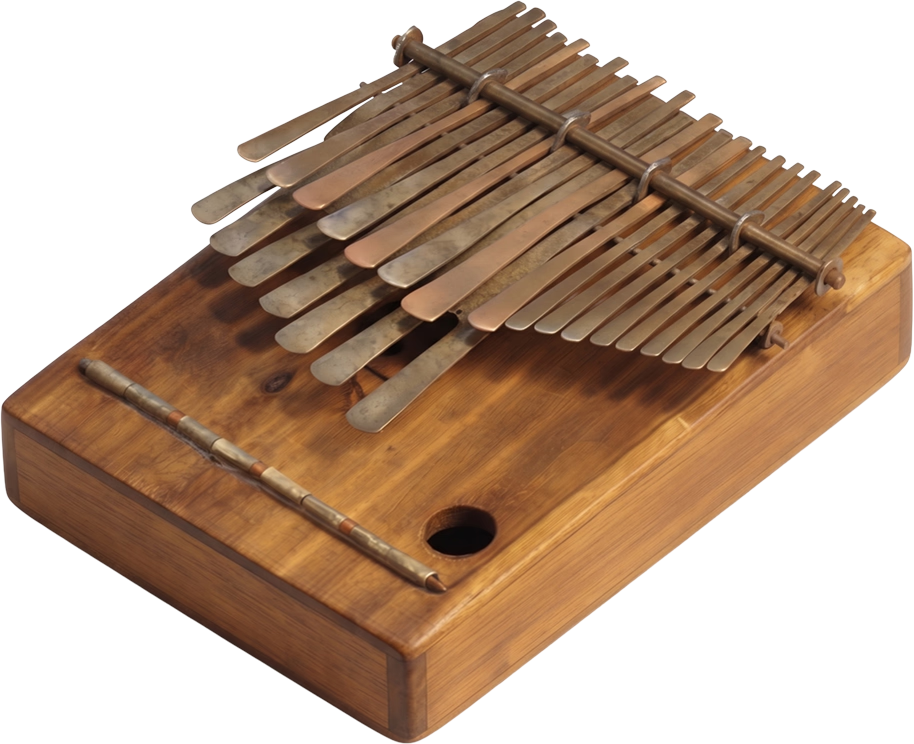
Melodic sacred instrument
The sound of the mbira is deep, shimmering, with a characteristic dirty, buzzing overtone that, according to African beliefs, attracts spirits. The melody is built on the intertwining of polyrhythmic patterns.
A solid wooden board with forged metal reeds fixed in two rows. Bottle caps or seashells are often attached inside or onto the body to create a noise effect.
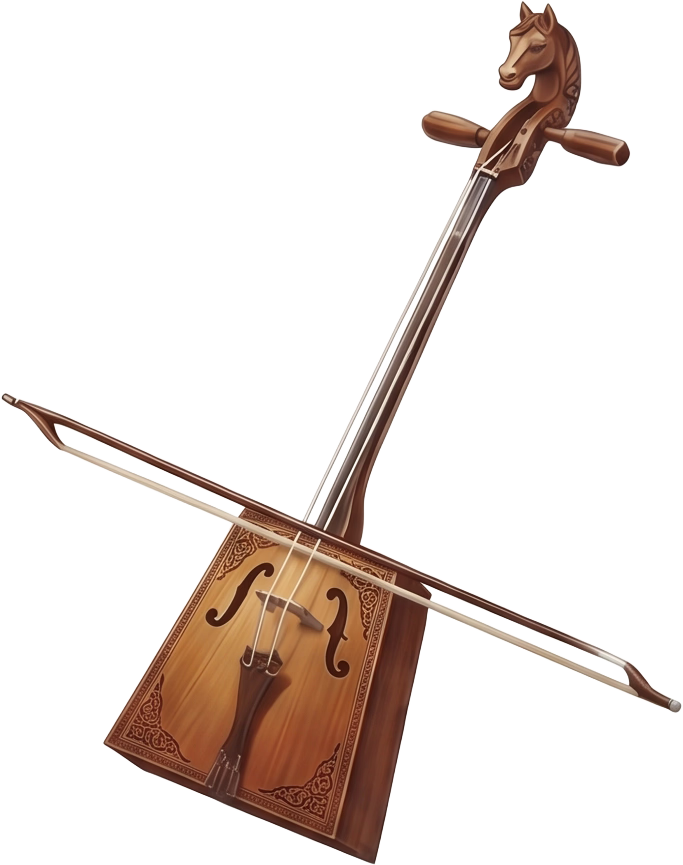
National bowed instrument
The sound of the morin khuur is thick, deep, rolling, and remarkably accurate in imitating a horse’s neigh, the sound of hooves running, and the howling of the steppe wind. It is filled with the powerful energy of nomadic civilization.
A trapezoidal wooden body covered with animal skin. The main distinctive feature is the carved pegbox head in the shape of a horse’s head. Only 2 horsehair strings are stretched across the instrument (a primary female string and a bass male string), and the bow is also made from a loose bundle of horsehair, which the musician tightens by hand while playing.
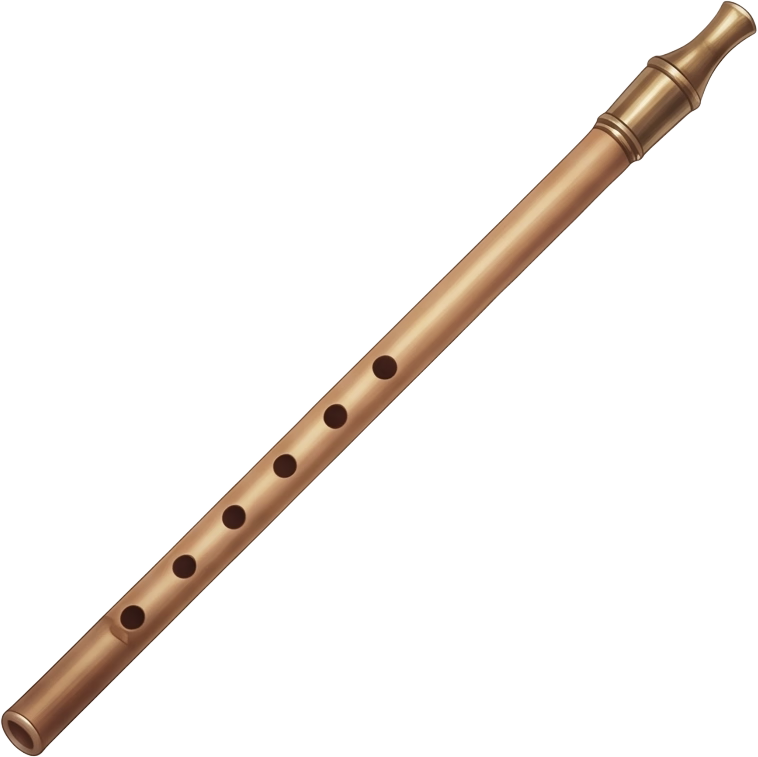
Solo wind instrument
The sound of the ney is piercingly sorrowful, husky, and filled with air and “breath”. It is capable of expressing profound longing and ecstatic joy. The overtone structure of the ney is so complex that its sound is often compared to human weeping.
It is an entirely hollow reed tube (typically having exactly nine segments) with 6 holes on the front and 1 on the back. Sound is produced using a complex technique: in the Turkish tradition, the musician presses a special mouthpiece (bashpare) against their teeth while directing the airstream at a specific angle.
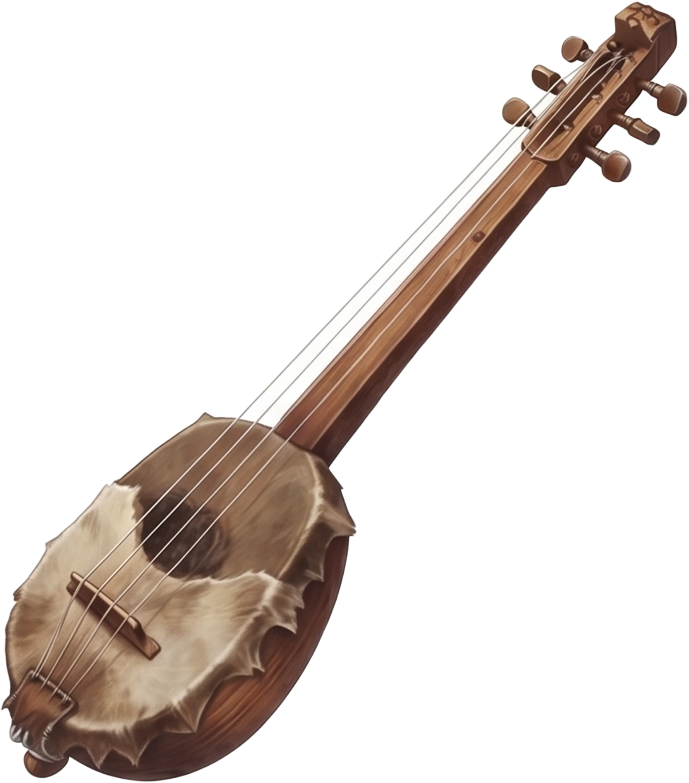
Plucked string instrument
The sound of the ngoni is dry, transparent, percussion-like, and very brisk, simultaneously resembling a banjo and a ukulele with an African flavor.
A small oval or round body made of a piece of wood, covered with goat or antelope skin, connected to a simple fretless wooden neck. Between 4 and 7 strings are stretched across the instrument.
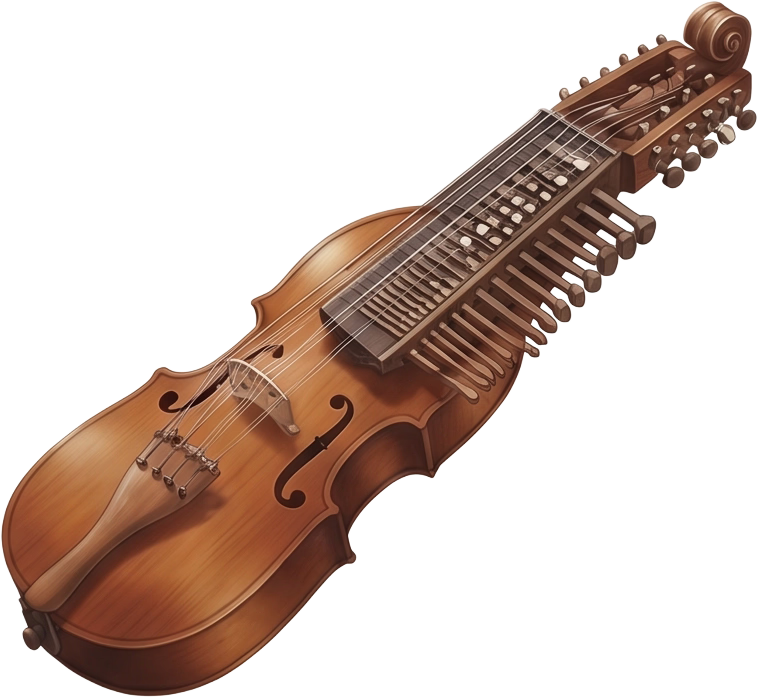
Bowed keyed instrument
The sound of the nyckelharpa is rich, silvery, deep, humming, and mesmerizing. Due to the abundance of resonating strings, the instrument sounds voluminous, resembling an entire small string ensemble.
The wooden body resembles a violin, but the neck is strewn with rows of wooden keys with tangents. 4 main strings and up to 12-16 sympathetic (resonating) strings are stretched beneath them.
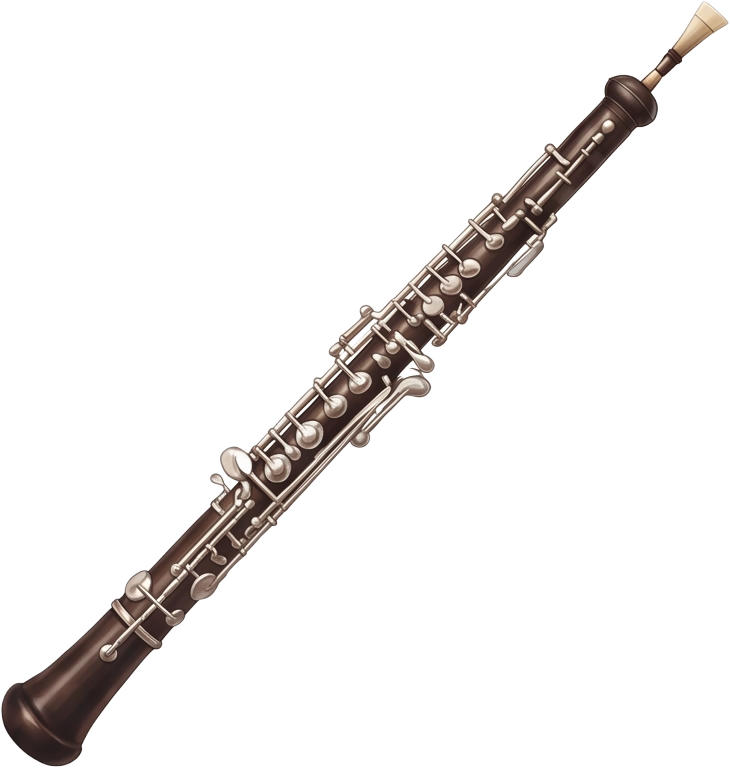
Woodwind orchestral instrument
The oboe’s sound is piercing, pastoral, clean, slightly nasal, and highly expressive. It is ideal for conveying pastoral, mournful, or tender melodies.
A conical tube made of hard wood (ebony, grenadilla) featuring a complex system of keys. The core element is a double reed made of two pieces of cane bound together, into which the musician blows.
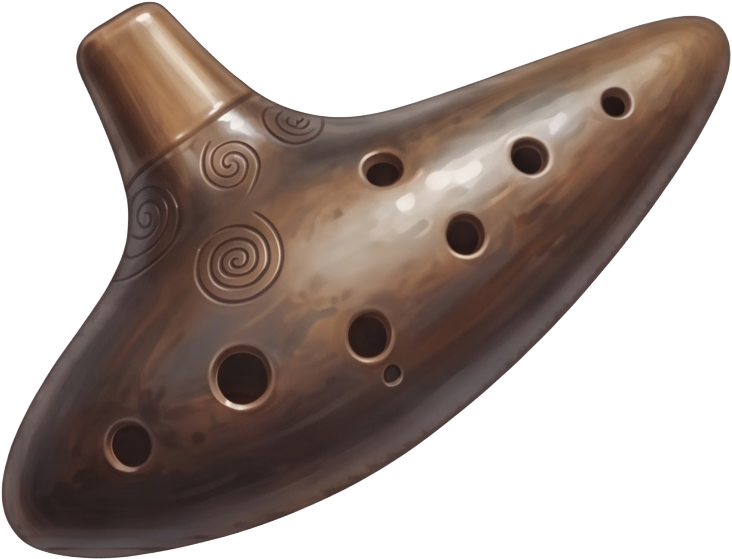
Vessel flute wind instrument
The sound of the ocarina is pure, soft, rounded, reminiscent of birdsong or a miniature flute. Due to its closed hollow body, it possesses a unique timbre free of excessive high harmonics.
It is an enclosed streamlined ceramic, clay, or plastic vessel featuring a mouthpiece and several fingerholes. Pitch depends on the volume of air input and the number of open holes.
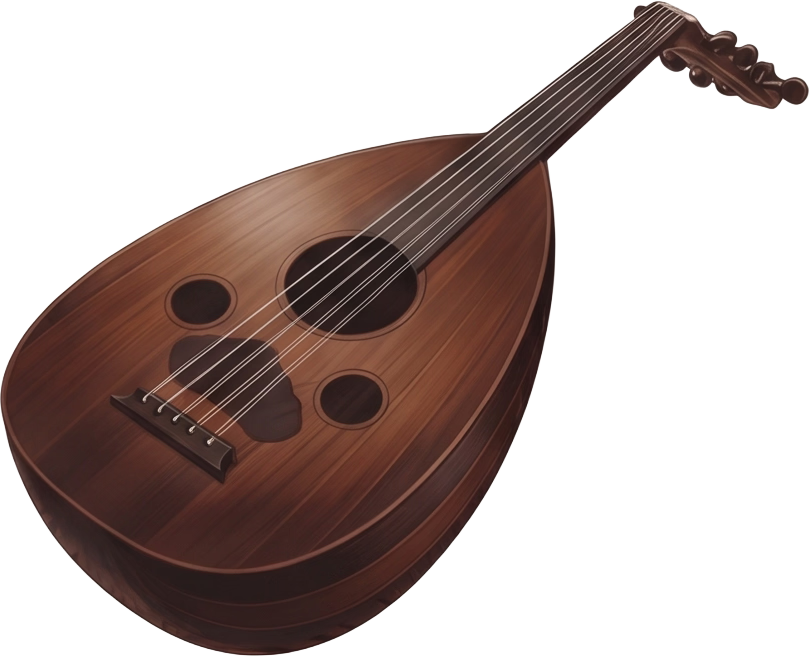
Plucked string instrument, ensemble leader
The sound of the oud is thick, velvety, deep, and incredibly melancholic. Due to its fretlessness, it allows for any microtones (quarter tones) required to perform complex Arabic maqams.
The large pear-shaped body is assembled from many thin wooden staves. The short neck angles backward at a sharp steep angle. The oud typically has 11 strings (5 paired courses and a single bass string), played with a long specialized plectrum (rishah).
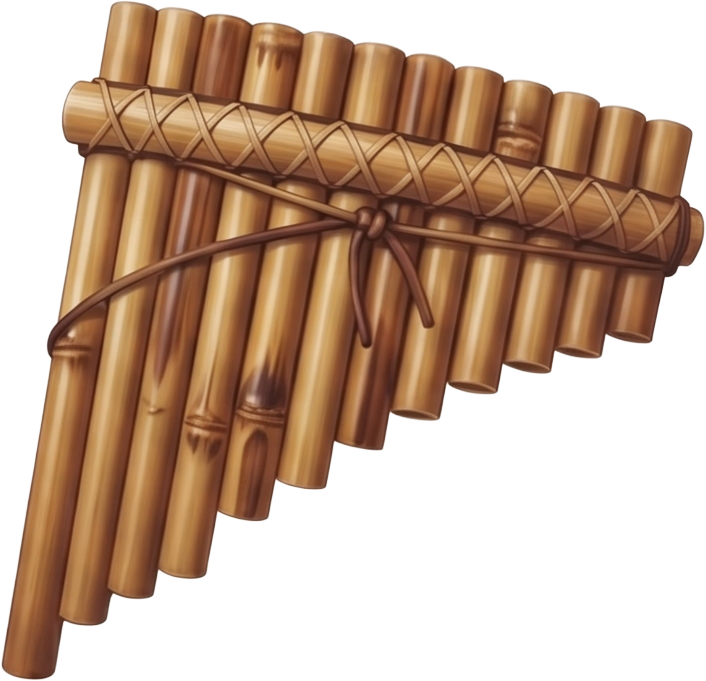
Solo wind instrument
The sound of the pan flute is incredibly airy, “breathing,” and evocative of an eagle soaring over mountain peaks or pastoral nature. The sound carries substantial wind noise, and rapid glissandos across the tubes create an effect of light, fairy-tale laughter.
It consists of a row (or two rows) of bamboo, reed, or wooden tubes of varying lengths bound together. The tubes are closed at the bottom. The musician blows across the open top rims of the tubes. The longer the tube, the lower the pitch.
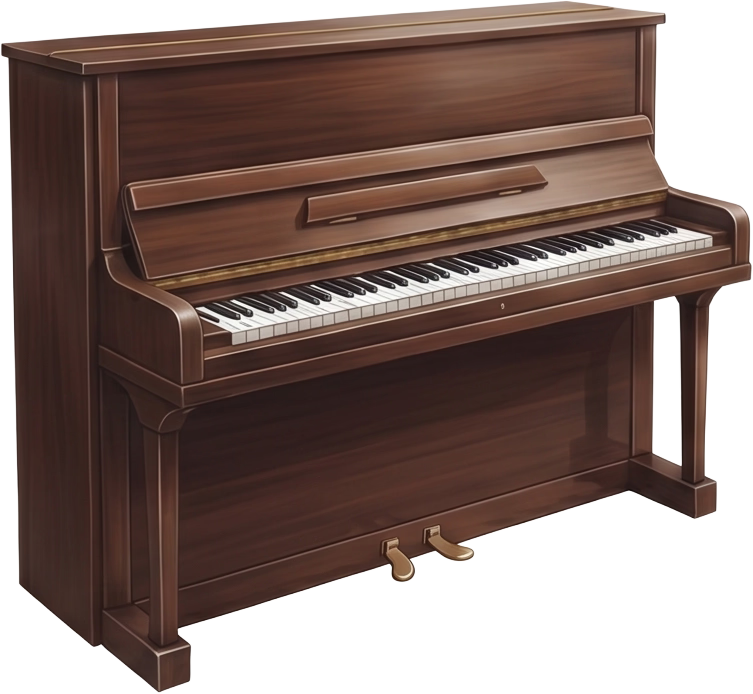
Keyboard solo and accompanying instrument
The sound of a grand piano (or upright piano) is foundational, rich, and spans the entire frequency spectrum—from thundering, thunder-like basses to crystalline, transparent upper notes. Pedals allow the sound to merge into an endless echo or cut off instantly.
A massive wooden body with an internal cast iron frame holding over 200 steel strings under a combined tension of dozens of tons. Pressing a key causes a felt-covered hammer to strike the strings and instantly rebound, letting the string resonate.
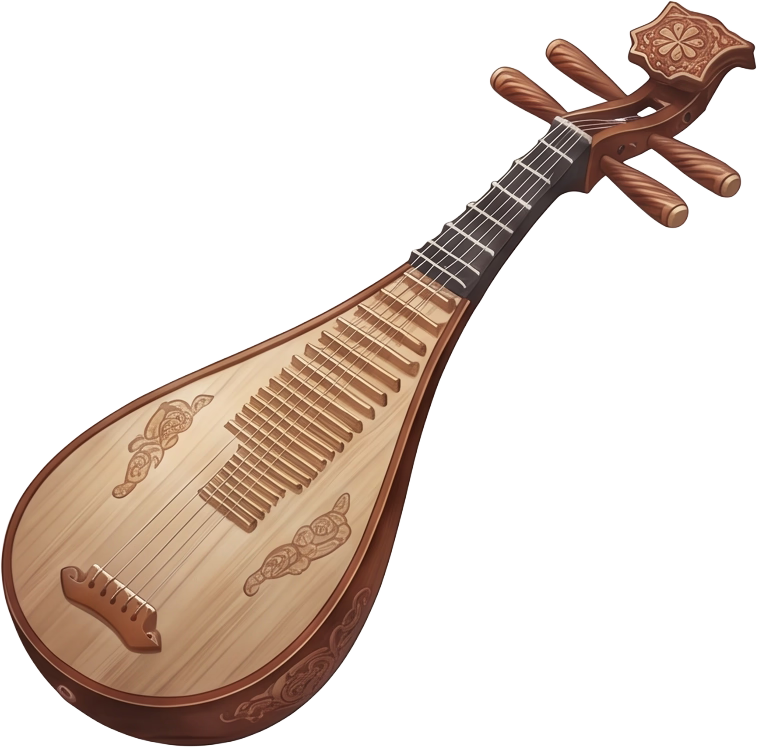
Plucked string solo instrument
The sound of the pipa is bright, pearly, crisp, and blindingly fast. Using special artificial plectrum picks attached to the fingers, the musician can produce stunning tremolos mimicking spring rain hitting a roof or galloping cavalry.
The pipa features a pear-shaped body carved from a solid piece of light wood, with a paulownia soundboard. Its curved neck and soundboard hold numerous high wooden frets (up to 30), enabling microtonal harmonies.
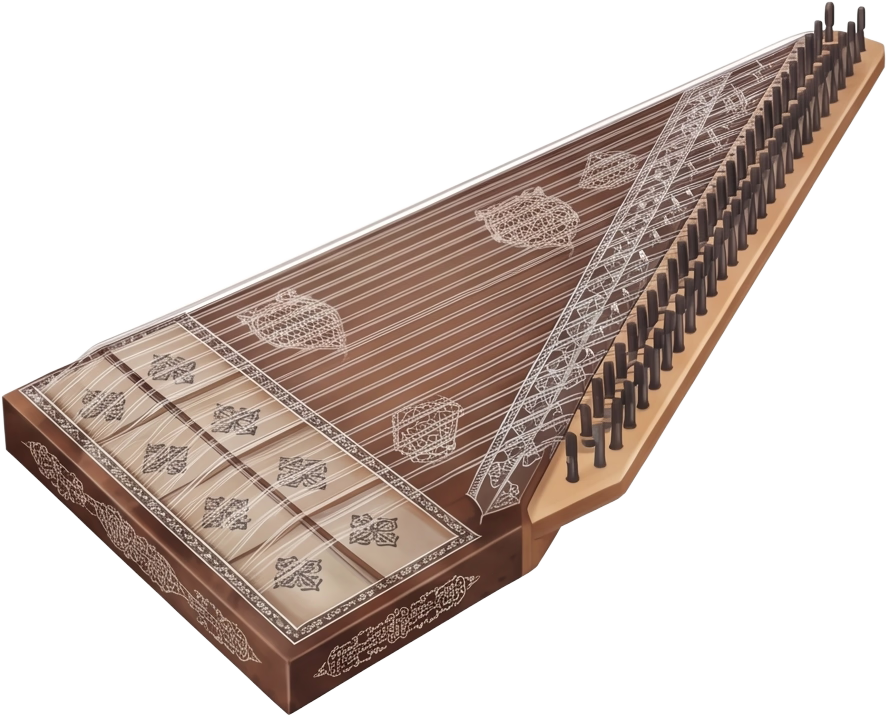
Plucked string instrument
The sound of the qanun is bright, sparkling, and crystal clear, resembling a harp or harpsichord but with a distinct Eastern flavor. The musician can instantly change string pitch by microtones while playing, creating shimmering, flowing glissandos.
It features a trapezoidal flat wooden body, with part of the soundboard covered in fish or calf skin. About 78 strings are strung on the qanun (grouped in triples for each note). A unique feature is the system of small metal levers (mandals) that allow the tuning to be changed mid-performance. The performer plays using metal plectrums worn on the fingers.
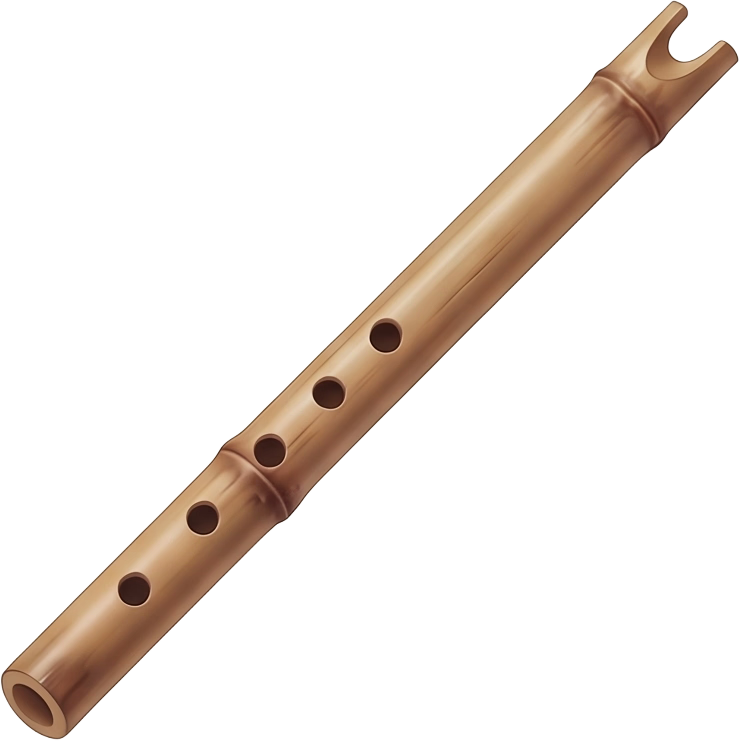
Solo wind instrument
The sound of the quena is airy, breathy, melancholic, with a beautiful soft air hiss on the attack. In the upper register, it sounds piercing and crying.
A tube (traditionally made of reed or wood) with an open upper end into which a deep U-shaped notch (mouthpiece) is cut. It features 6 holes on the front and one on the back for the thumb.
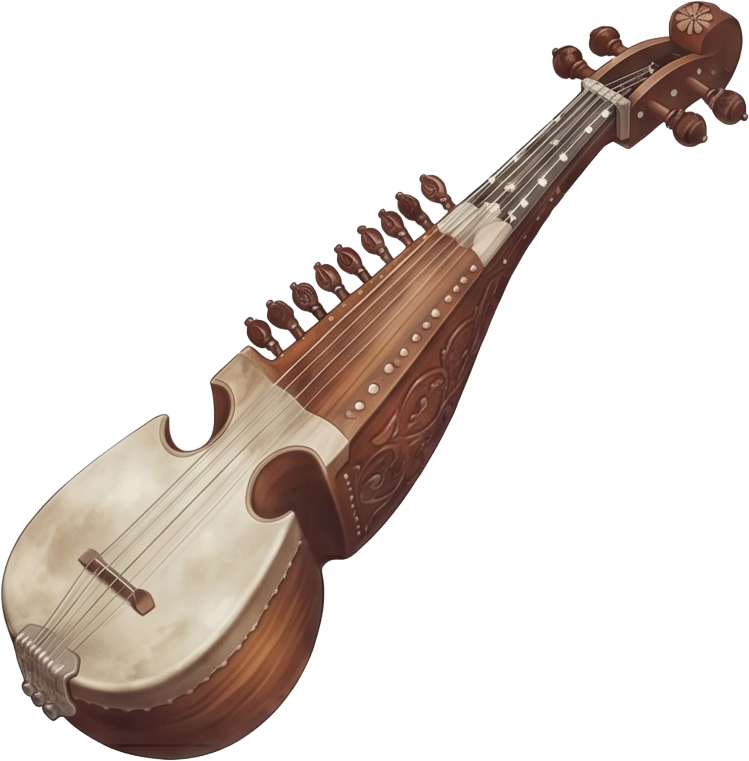
Plucked string ancestor of lute family
The sound of the rabab is deep, resonant, and percussive due to its skin soundboard. The presence of sympathetic (resonating) strings adds a light echo and rich overtones. It is capable of sounding both meditative and smooth, as well as incredibly rhythmic.
The body is carved from a single piece of mulberry wood and features a distinctive shape with two side notches (resembling a figure eight). The lower part of the soundboard is covered with goat skin, while the upper part remains wooden. The instrument has a short neck, 3 main playing strings, and up to 15 sympathetic strings.
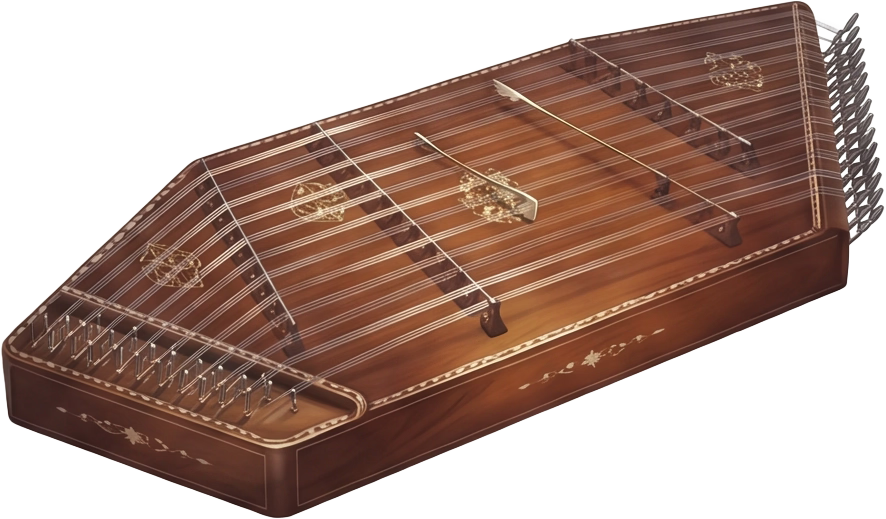
Hammered string solo instrument
The sound of the santur is crystalline, ringing, ethereal, and very rich due to the simultaneous vibration of multiple strings. The melody seems to “float” in the air, leaving a long reverberating trail.
A trapezoidal flat walnut box. It is strung with 72 strings (4 strings per pitch, resting on small wooden bridges). The musician plays with two lightweight wooden mallets (mezrab) held between the index and middle fingers.
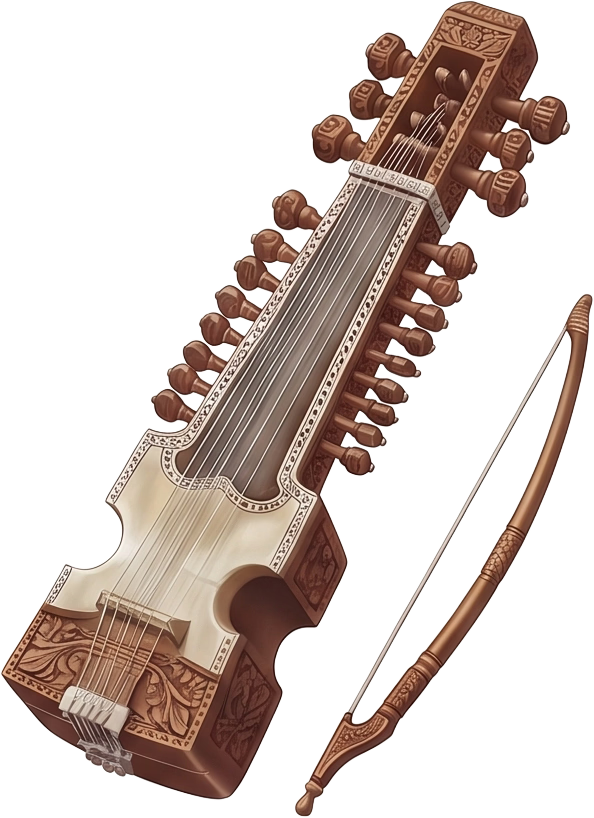
Bowed solo instrument
The timbre of the sarangi is piercing, crying, deeply emotional, and slightly husky. Since it lacks traditional metal strings (using gut or nylon strings instead) and frets, the performer presses the strings not with the pads of their fingers, but with the sides of their nails, which produces a unique microtonal glissando.
The body is carved from a single piece of wood with a wide neck, and the lower part of the soundboard is covered with goat skin. The instrument has 3 main strings and up to 35–40 sympathetic resonating strings passing beneath them.
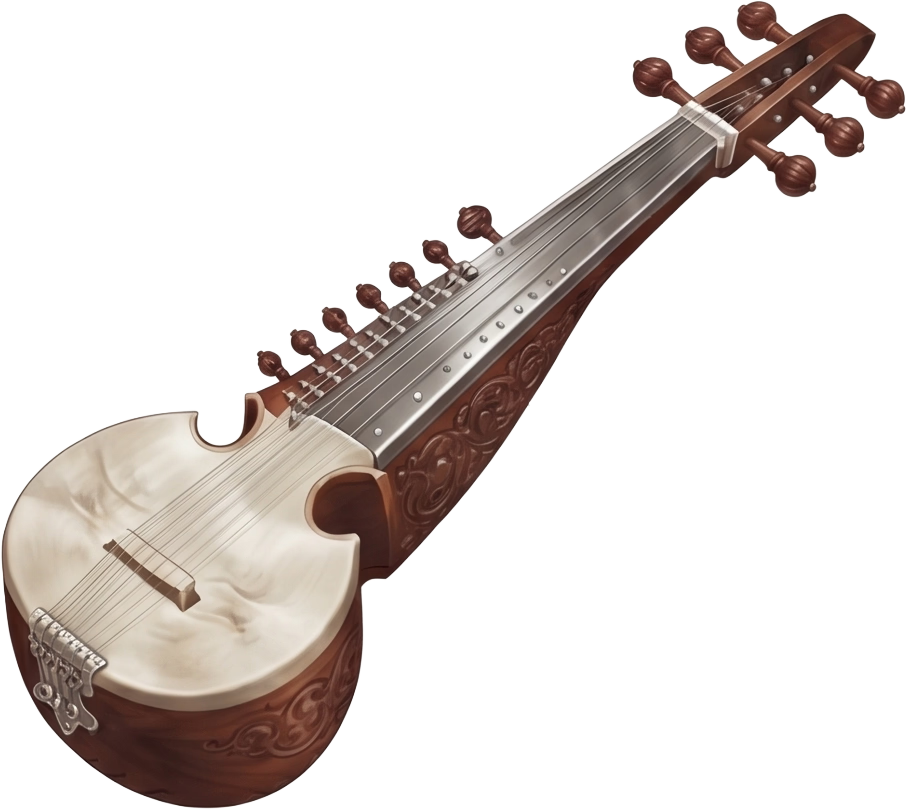
Plucked string solo instrument
Due to the absence of frets and the skin stretched over the resonator, the sarod produces a thick, velvety, and enveloping sound resembling a human voice or a cello. The instrument is ideally suited for performing slow, meditative introductions (alaps) and virtuosic fast passages.
The body of the sarod is carved from a single piece of valuable wood (such as teak or mahogany), and the lower part of the membrane is covered with goat skin. The instrument features 4 main melody strings, resonant strings (ranging from 11 to 15), and special rhythm strings (chikari).
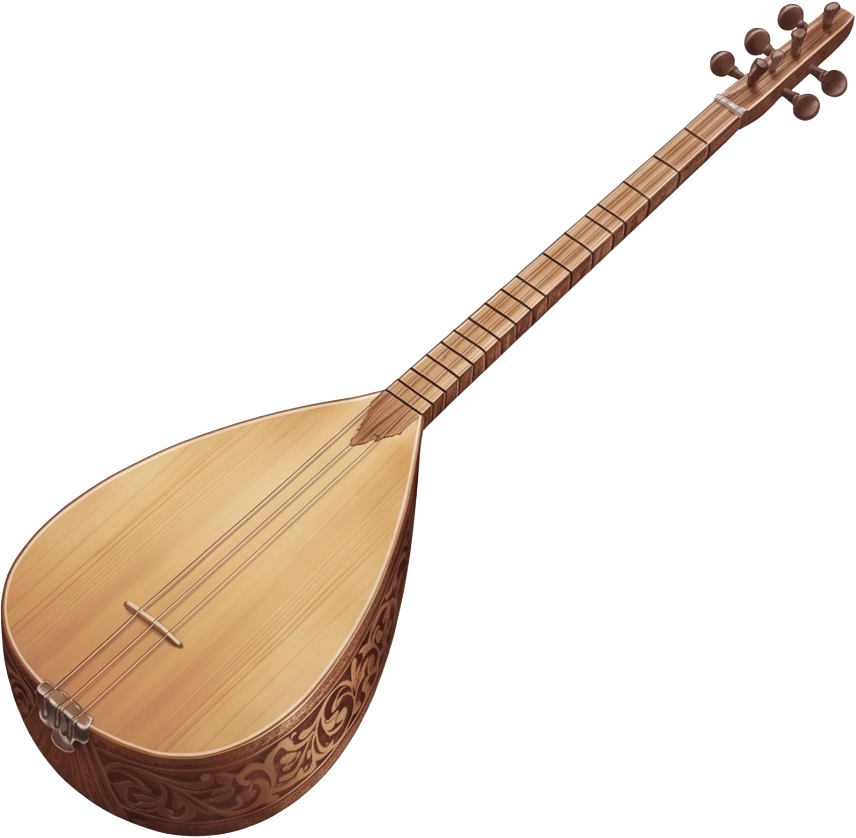
Plucked string instrument
The sound of the saz is ringing, bright, lyrical, with a recognizable metallic ring of doubled or tripled strings. It is perfectly suited both for solo virtuoso tunes (zeybeks) and for accompanying deep vocals.
A pear-shaped body made of solid wood (mulberry, walnut) with a long neck tied with numerous movable fishing line frets, allowing for precise microintervals of the Turkish tuning system. The strings are divided into courses (2–3 strings per row).
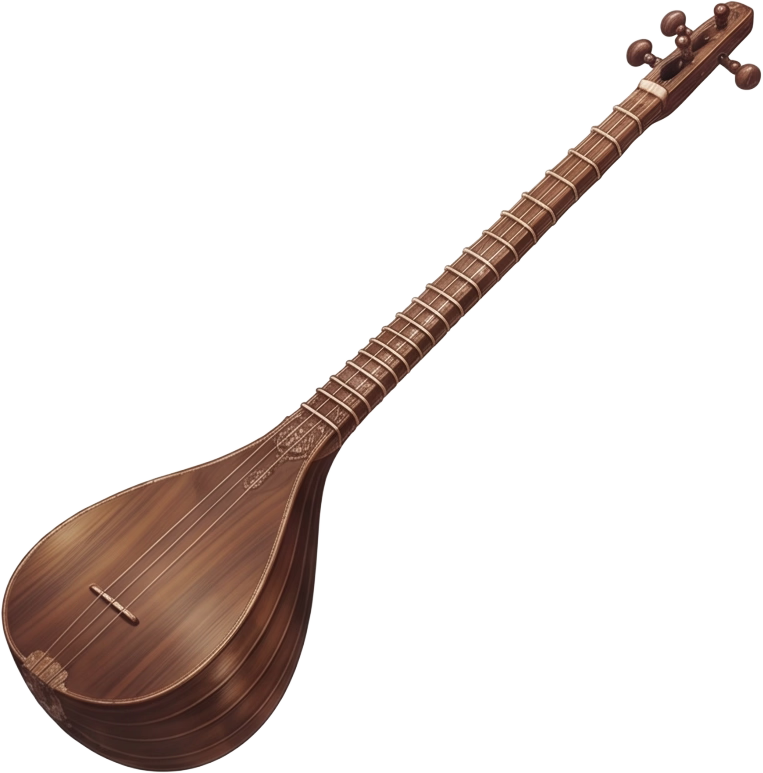
Traditional solo and chamber instrument
The Persian setar has a dry, transparent, yet deeply melancholic and meditative sound. Its silvery timbre has a remarkable ability to calm the mind, which is why the setar has been used for centuries in Sufi spiritual practices to achieve a state of deep concentration and inner peace.
The body of the setar is carved from a single piece of mulberry wood in the shape of a pear, and the soundboard is made of the thinnest wood of the same tree with numerous sound holes. Movable gut frets are arranged on the neck, allowing for precise reproduction of the microintervals of the traditional Persian modal system.
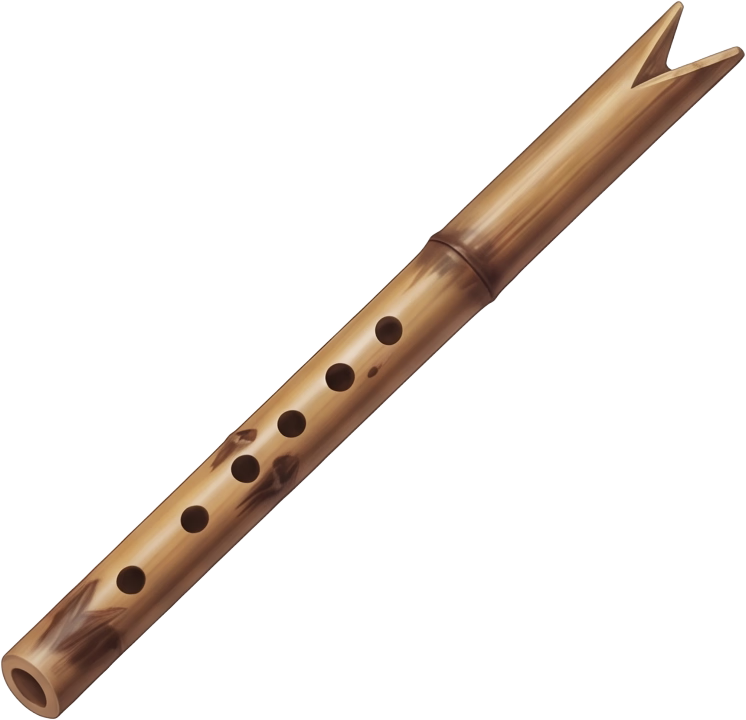
Solo meditative wind instrument
The sound of the shakuhachi is unique for its “earthy” texture: it blends a pure tone with the deep rustle of wind, air friction, and subtle microtonal bends. It can convey absolute emptiness (ku), silence, and the power of elements with a single breath.
The flute is carved from the lower root-end of the madake bamboo stalk, including the thick rhizome. It has only 5 finger holes (4 on the front, 1 on the back). Sound is produced by blowing across an outward-slanted mouthpiece edge, requiring precise control over head angle and breath.
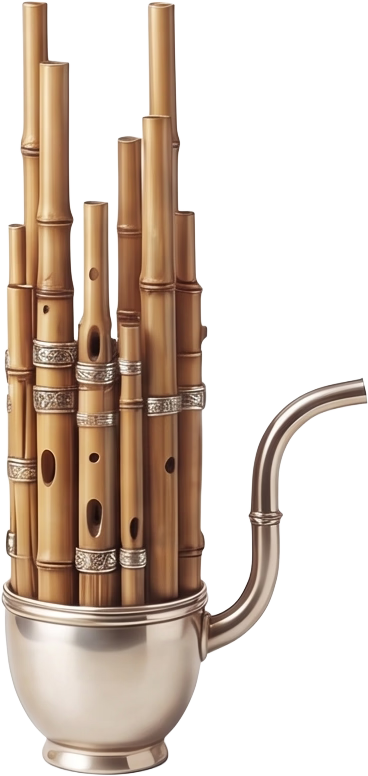
Reed wind instrument
The sound of the sheng is bright, shimmering, organ-like, with a light metallic and reed tinge. It is capable of creating a dense, multi-layered harmonic texture that sounds very modern and futuristic.
It consists of a cup-shaped body (resonator) and a bundle of vertical bamboo tubes of varying lengths. At the base of each tube is a tiny metal reed. The musician blows into the mouthpiece and covers holes on the tubes with their fingers, extracting chords.
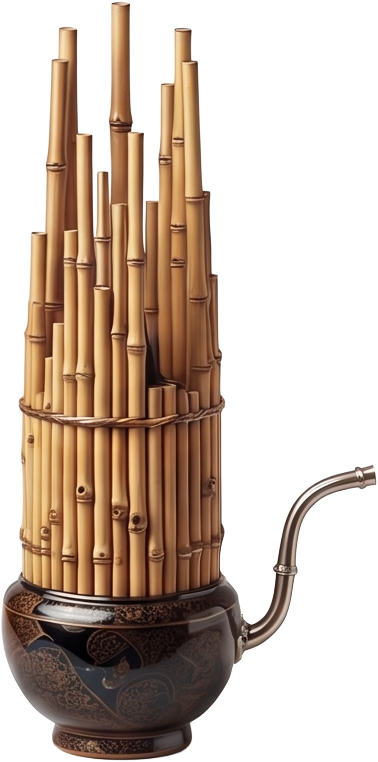
Orchestral wind instrument (gagaku)
The shō sounds like a pure, mystical, motionless vertical chord hovering in space. It creates a dense vertical harmony, like a frozen sound cloud.
It consists of 17 thin bamboo tubes arranged in a circle within a cup-shaped body. Tiny metal reeds are installed at the bases of the tubes. The musician extracts sound both when inhaling and exhaling.
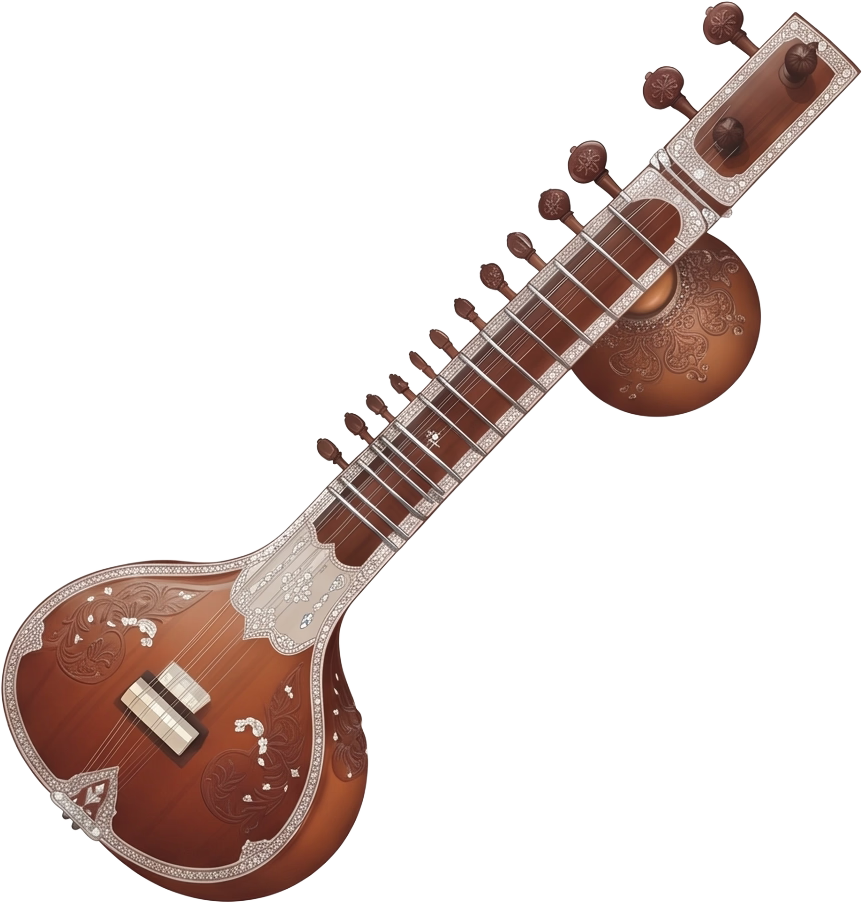
Plucked solo instrument
The sound of the sitar is unmistakable: it features a ringing, “buzzing” timbre (the jawari effect) and an incredibly long sustain thanks to a dozen sympathetic (resonating) strings. It is capable of deep, “crying” microtonal bends (meend), creating a hypnotic atmosphere.
The body (resonator) is made from a dried hollow gourd. A long hollow teak neck is fitted with convex metal frets that can be moved to adjust for the desired raga. In addition to 5–7 main strings, 11–13 sympathetic strings run beneath the frets.
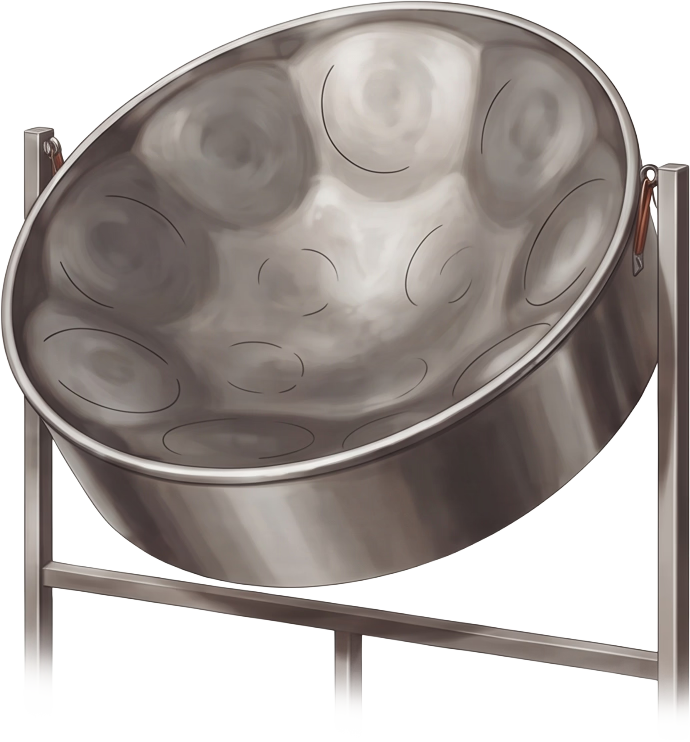
Melodic percussion instrument
The sound of the steelpan is bright, tropical, ringing, oily, and festive, associated with the sun, sea, and Caribbean holidays. Incredibly, full polyphonic harmonies can be played on a single drum.
The bottom of a metal oil drum is hand-hammered into a convex bowl shape, on which sectors (notes) of various sizes are embossed. Each note is precisely tuned to a specific frequency. The musician plays with two mallets with soft tips.
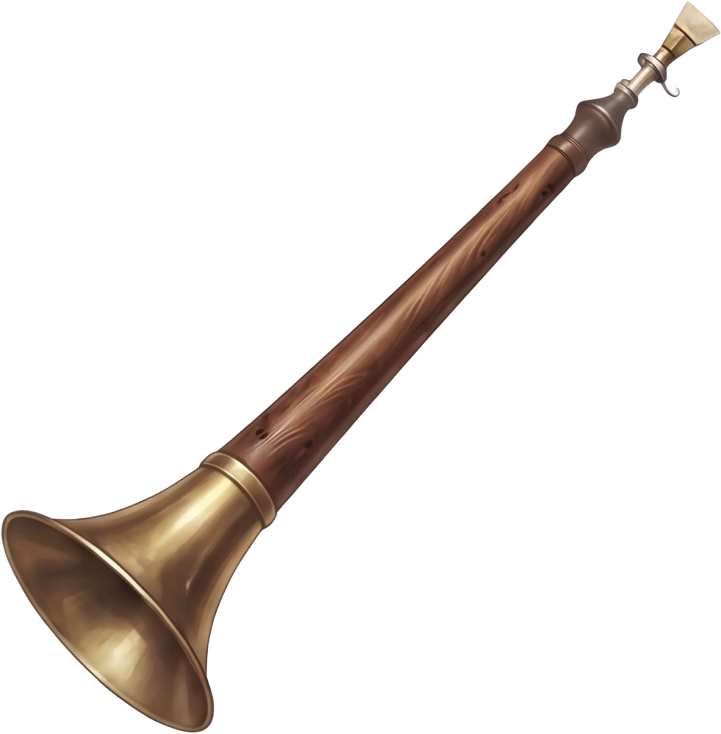
Loud folk wind instrument
The sound of the suona is piercing, sharp, bright, triumphant, and extremely loud. It is capable of imitating bird songs, human laughter, or crying, easily cutting through any street noise.
A conical wooden tube with 7-8 holes, crowned with a metal bell (butterfly) at the end and equipped with a small double reed made of reed cane.
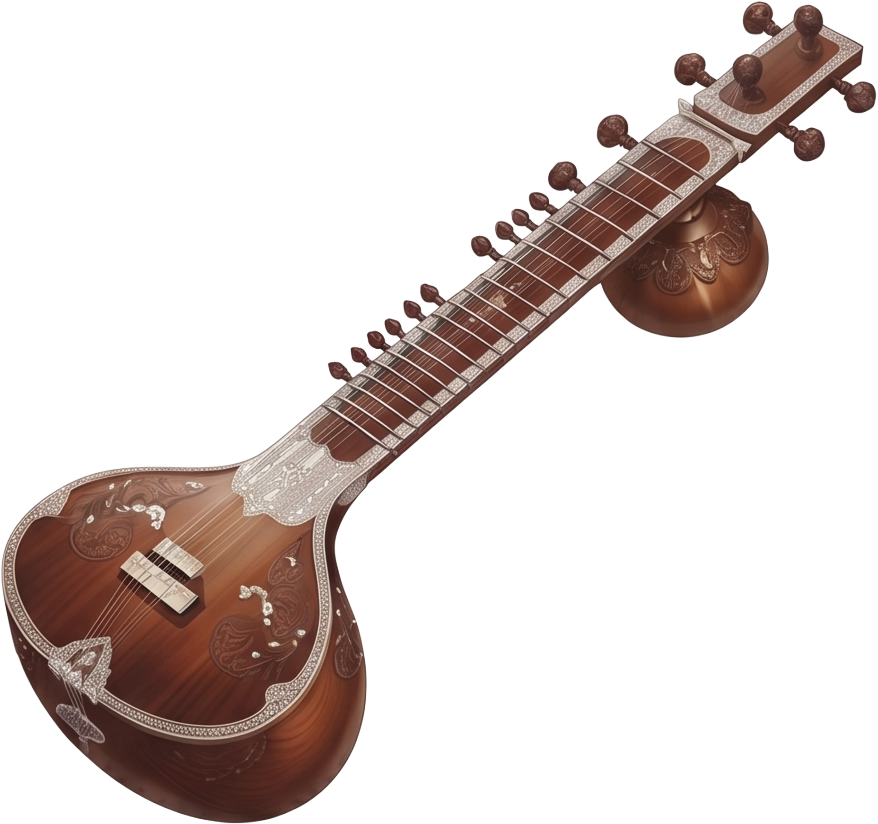
Bass plucked string instrument
The sound of the surbahar is incredibly thick, guttural, voluminous, and enveloping. It has a long sustain and allows for deep, smooth string bends, creating a cosmic, sacred sound space.
The design is similar to the sitar, but the gourd resonator body is significantly larger, the neck is wider, and the strings are thicker. The instrument also features main playing strings, resonating (sympathetic) strings, and bass strings for a droning accompaniment.
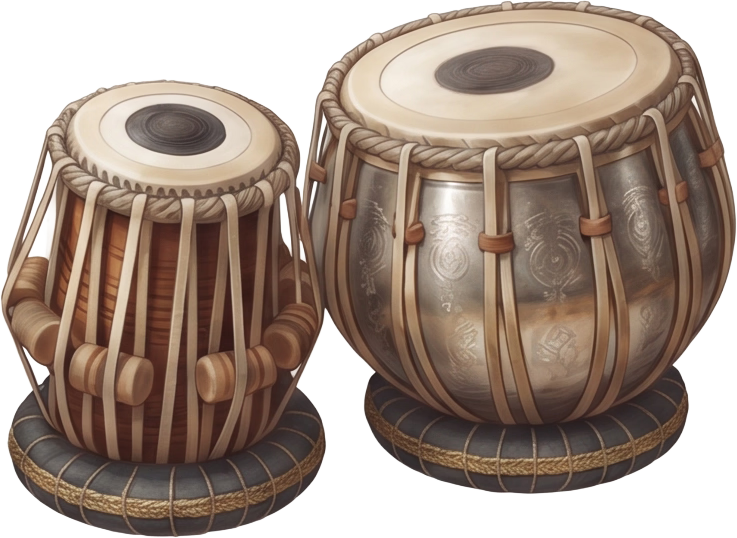
Percussion, leading rhythm
The tabla has an astonishingly rich, “speaking” sound. Thanks to a special black spot on the membrane made of a paste of soot and rice, the instrument can produce dozens of different overtones and inflections, mimicking human speech.
The right drum is carved from a solid block of wood (teak or rosewood), while the left is typically made of clay or copper. Tension is regulated using leather straps and wooden cylindrical tuning dowels.
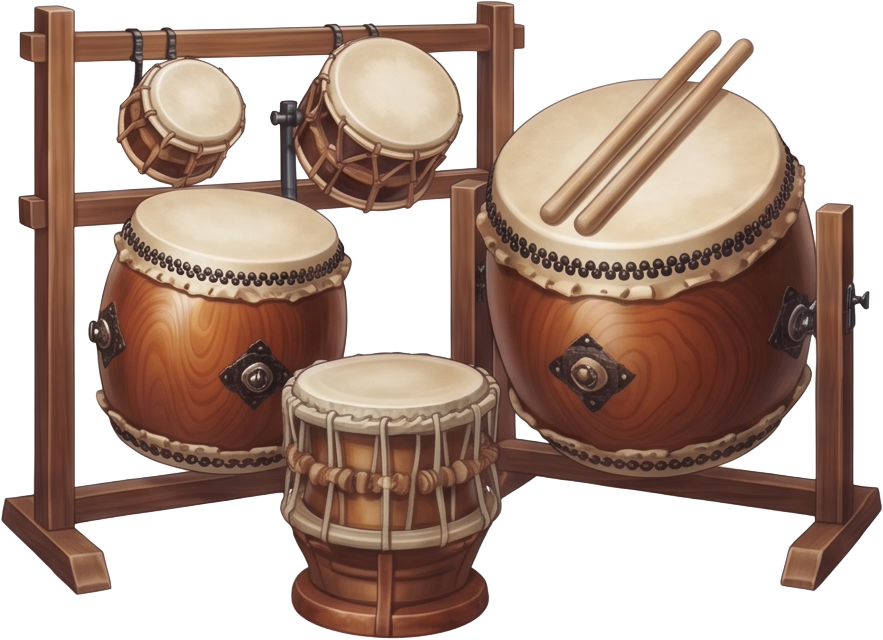
Powerful percussion ensemble instrument
The sound of the taiko is a physical force. It features colossal bass pressure, deep resonance, and a striking impact felt throughout the entire body. A single strike can shake the air and fill space completely.
A taiko body is typically carved from a single piece of solid wood (often Japanese zelkova), with thick cowhide stretched tightly and secured by massive iron tacks. Performers strike the drum using heavy wooden sticks called bachi, engaging their entire bodies.
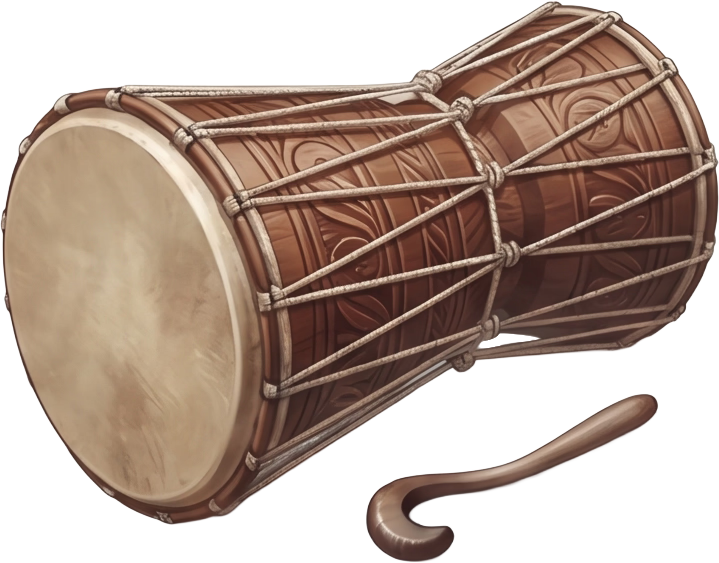
Imitational percussion instrument
The drum’s sound is flexible, floating, producing characteristic “vocal” glissandos that truly sound like compressed human speech or bird song.
Shaped like an hourglass. Two leather membranes are connected on the sides by a system of tight leather straps. By squeezing the straps under the armpit and striking the membrane with a curved mallet, the drummer changes the pitch directly while playing.
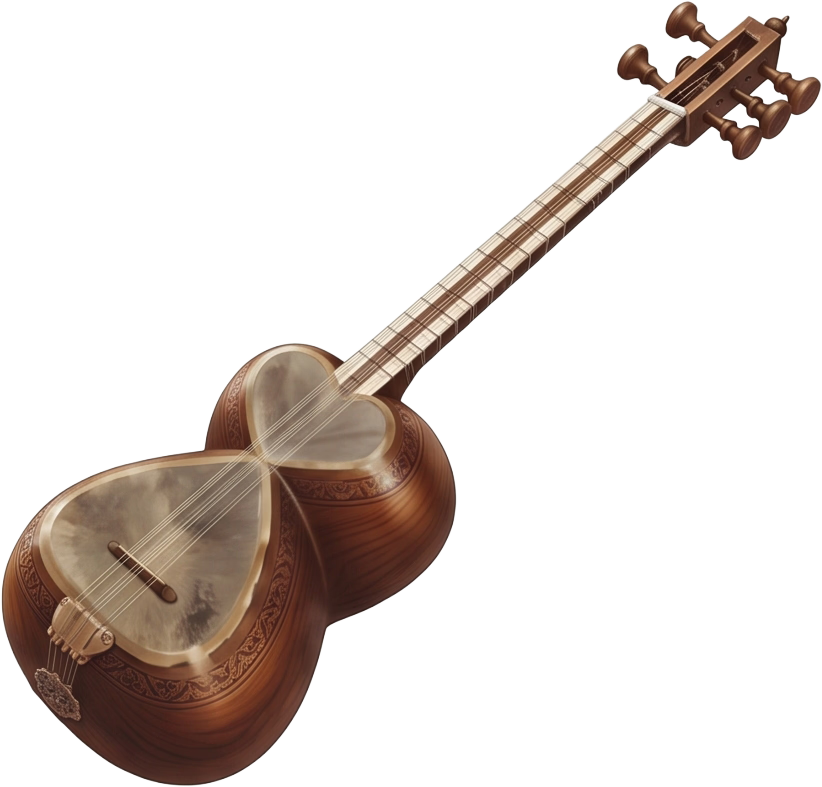
Solo plucked string instrument
The sound of the tar is bright, metallic, ringing, and saturated with an abundance of overtones. Double paired strings create a dense, ringing timbre perfectly suited for fast passages and subtle microtonal melisma.
The body has a recognizable “figure-eight” shape with two resonator bowls carved from a single piece of mulberry and covered with a thin membrane of bull pericardium. Dozens of gut or fishing line frets are tied to the neck for precise tuning. It is played with a small copper plectrum.
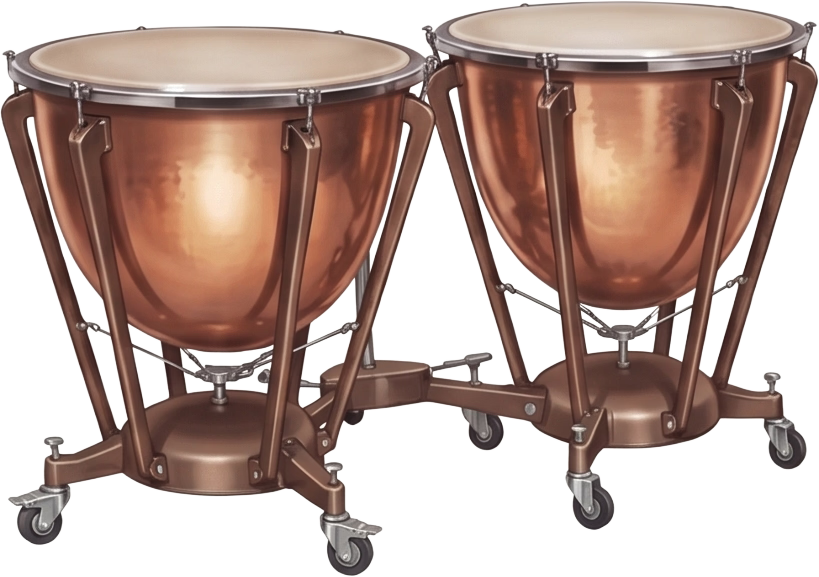
Tuned percussion instrument
The sound of the timpani is powerful, rolling, thunderous, capable of conveying tension, anxiety, or a triumphal thunderclap. They can sound as dry strikes or thick sustained rolls (tremolo).
They consist of a hemispherical copper or fiberglass kettle with a leather or plastic membrane stretched across it. Using a foot pedal, the musician alters membrane tension, precisely tuning the timpani to a target pitch in the orchestral score.
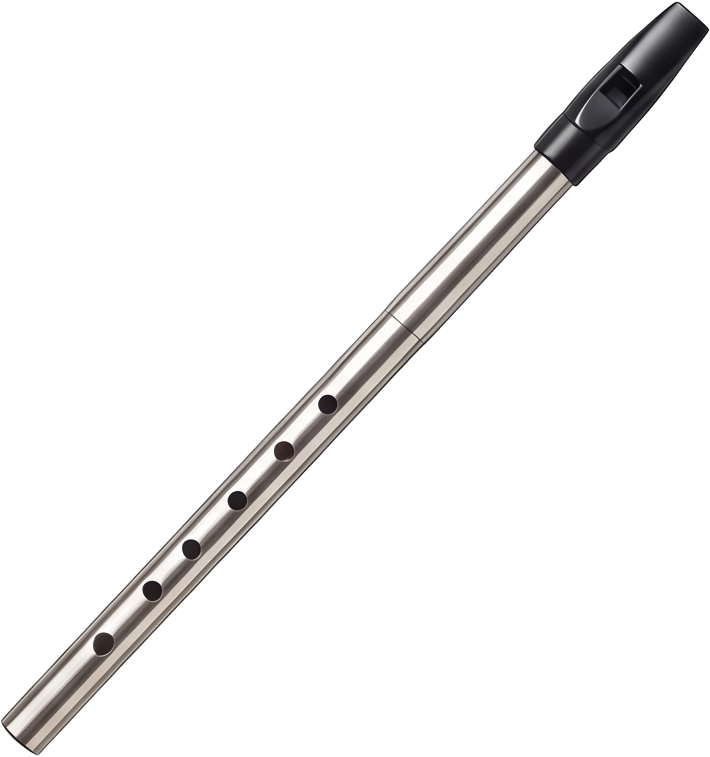
Folk wind instrument
The sound of the whistle is piercing, silvery, light, slightly harsh on high notes, and incredibly agile. It allows for mind-boggling fast Irish ornaments and trills.
A simple metal (or plastic) tube with a flat whistle mouthpiece and 6 even holes on the front.
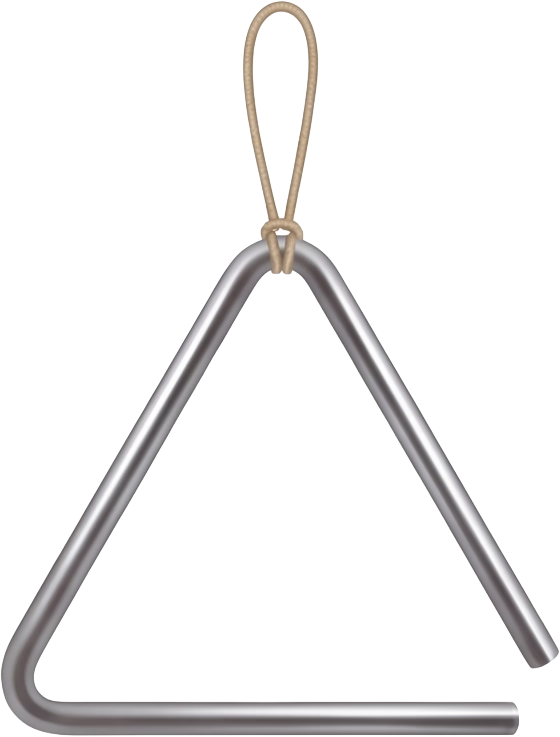
Orchestral noise percussion instrument
The sound of the triangle is silvery, sparkling, ringing, high, and piercing. Even a single strike can cut through the powerful sound of the entire symphony orchestra, adding a radiant “highlight”.
It consists of a steel rod bent into a triangular shape, leaving one corner open (which acoustically enhances vibrations). The instrument is suspended from a thin strap or string and struck with a small metal rod.
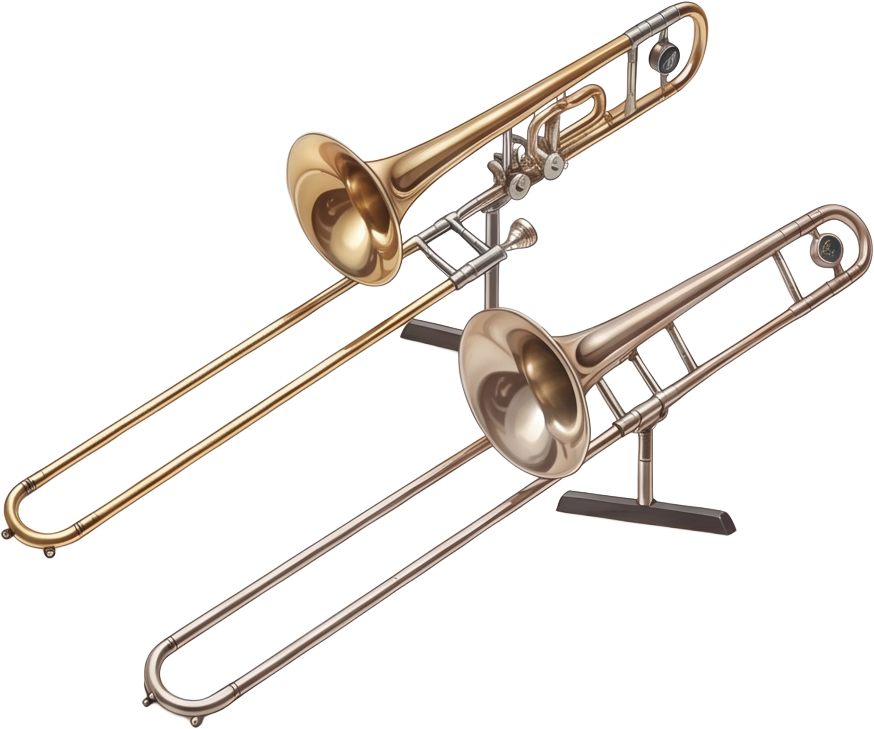
Brass orchestral and jazz instrument
The trombone possesses a powerful, majestic, thunderous, and rolling sound in loud dynamics, yet in quiet playing (piano) it sounds extraordinarily soft, warm, and mysterious.
It consists of a cylindrical brass tube with a sound bell and a movable U-shaped slide. By extending the slide to varying distances, the musician increases the overall tube length and lowers the instrument’s pitch.
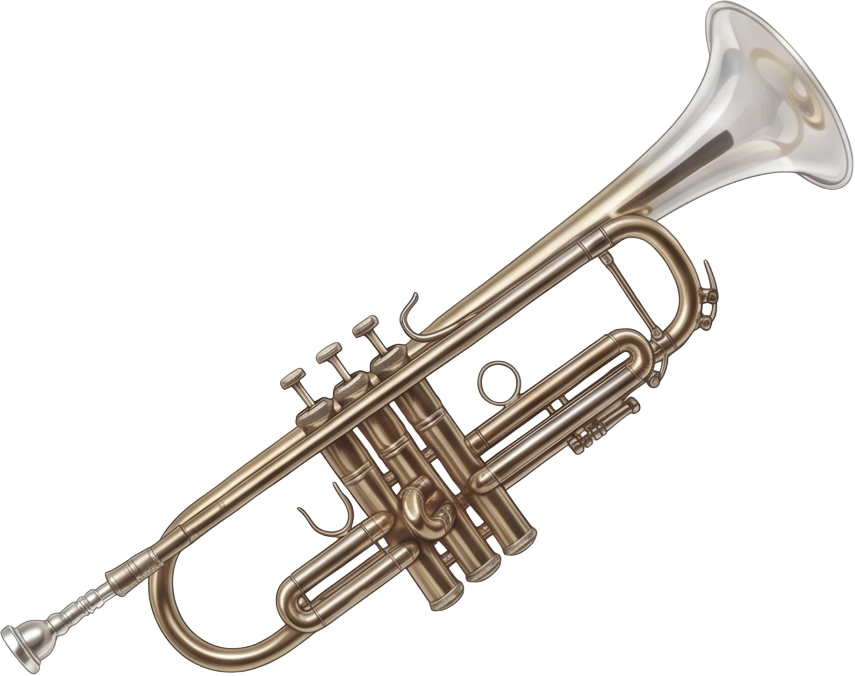
Brass orchestral and jazz instrument
The trumpet sound is bright, brilliant, triumphal, piercing, and powerful. Using specialized mutes inserted into the bell, the sound can be rendered mysterious, “crying,” nasal, or muted and velvety.
A cylindrical looped brass tube featuring a cup-shaped mouthpiece and three valves (keys) that alter the length of the air column.
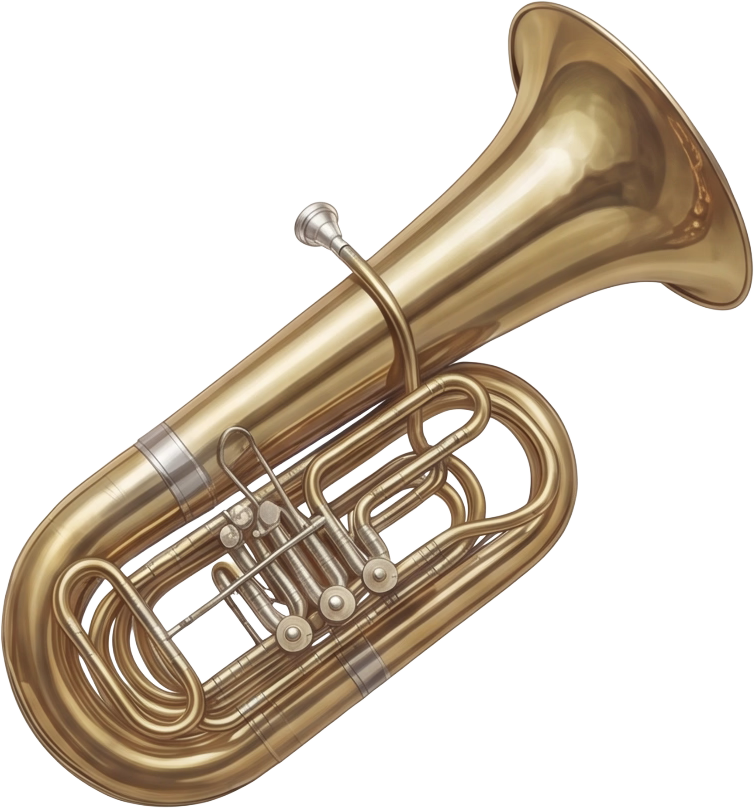
Lowest brass instrument
The sound of the tuba is deep, monumental, velvety, and rolling. Despite its gigantic proportions, in skilled hands it can sound surprisingly agile, soft, and lyrical.
A massive wide brass tube up to 7 meters in total length, flaring out significantly toward a giant upward-facing bell. It features 4 to 6 valves for pitch control. The musician plays standing or sitting, supporting the instrument on their knees.
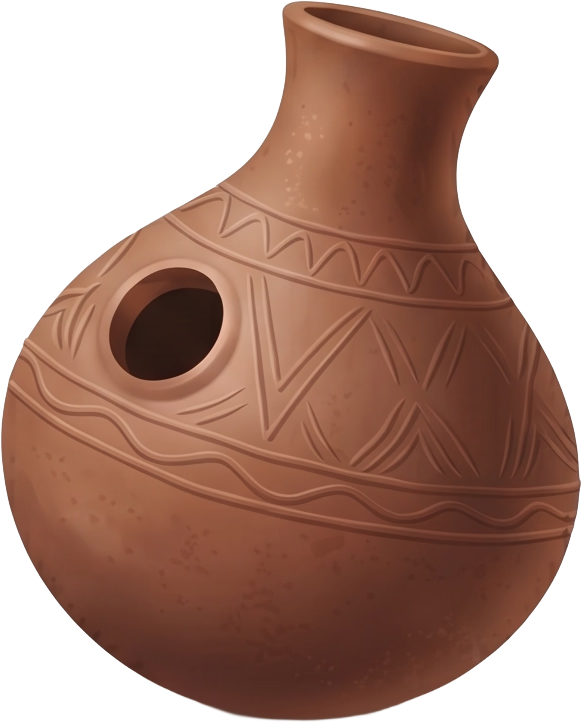
Bass percussion instrument
The sound of the udu combines a dry clay click on the surface and a deep, guttural, droning bass thud when the side hole is sharply closed with the palm. It creates a hypnotic, watery, and very organic groove.
A handmade clay jug with two openings: a classic neck at the top and an additional round hole on the side. The musician strikes the jug with fingers and palms while alternately closing and opening the side hole, changing the volume of air inside.
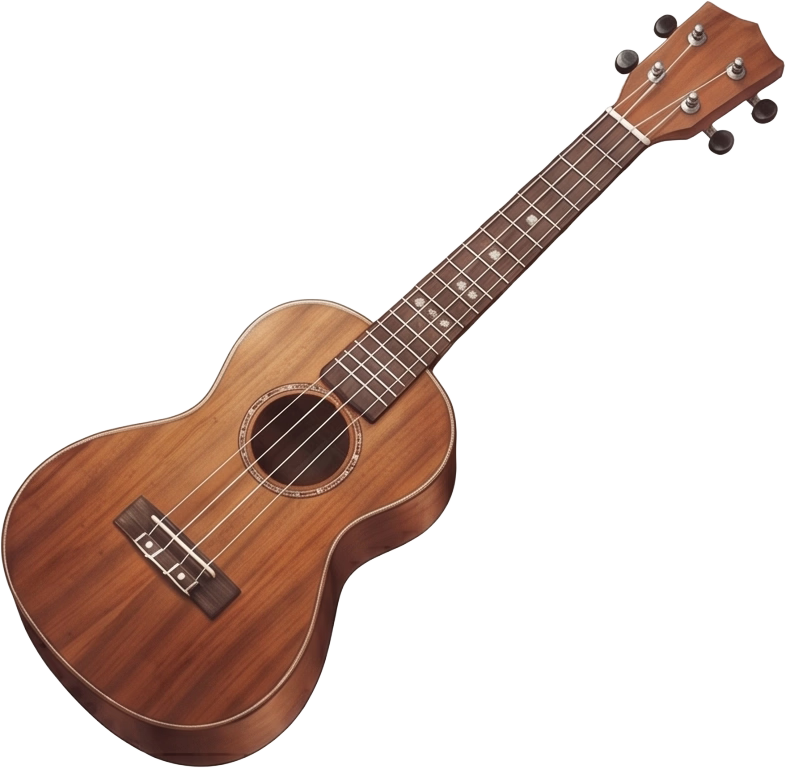
Plucked string instrument
The sound of the ukulele is cheerful, high-pitched, carefree, and very bright. Due to the short neck and nylon strings, the sound decays quickly, making it ideal for rhythmic beach song accompaniment.
It is a miniature four-string guitar. The classical (soprano) size is very compact. An interesting tuning feature: the 4th (top) string is not tuned lower than the rest (like a guitar), but high, in the same octave as the 2nd string (high G), which produces that light, “jumping” sound.
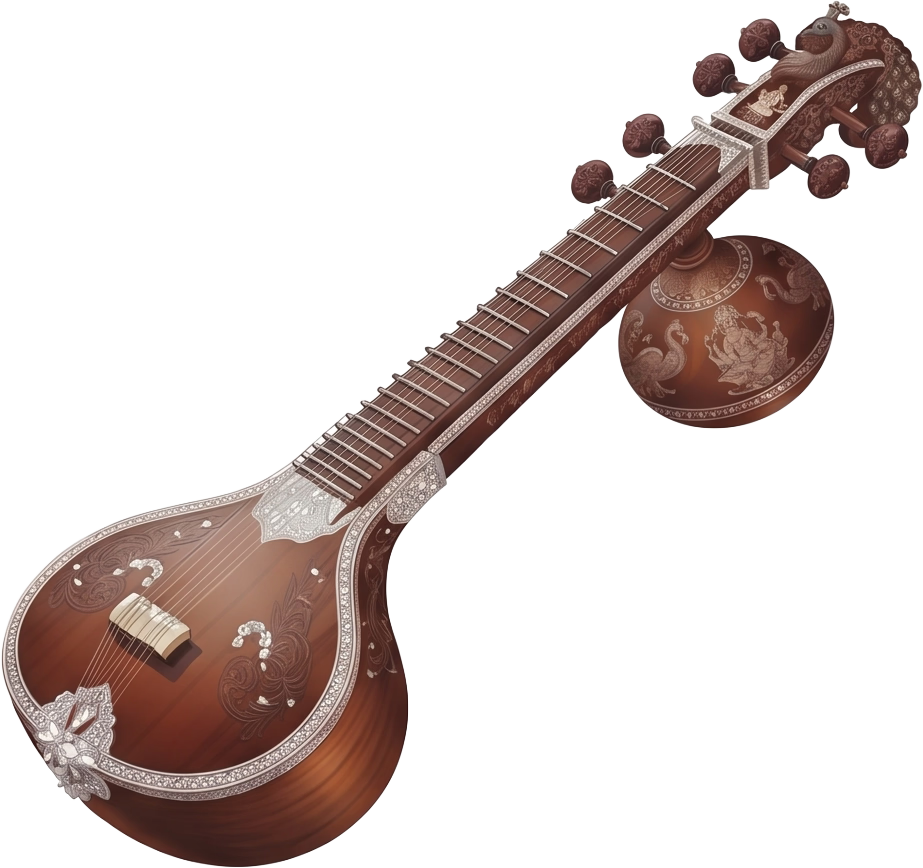
Academic string instrument
The Saraswati Veena sounds noble, deep, and ceremonial. Its tone is distinguished by a rich sustain and a special regal lyrical quality. It is capable of conveying the slightest microtonal nuances of ragas, creating a sense of sacred space.
The instrument is made from jackfruit wood. It consists of a large resonant drum, a long neck with frets fixed by a special wax-metal alloy, and a second hollow resonator at the end, intricately carved from wood.
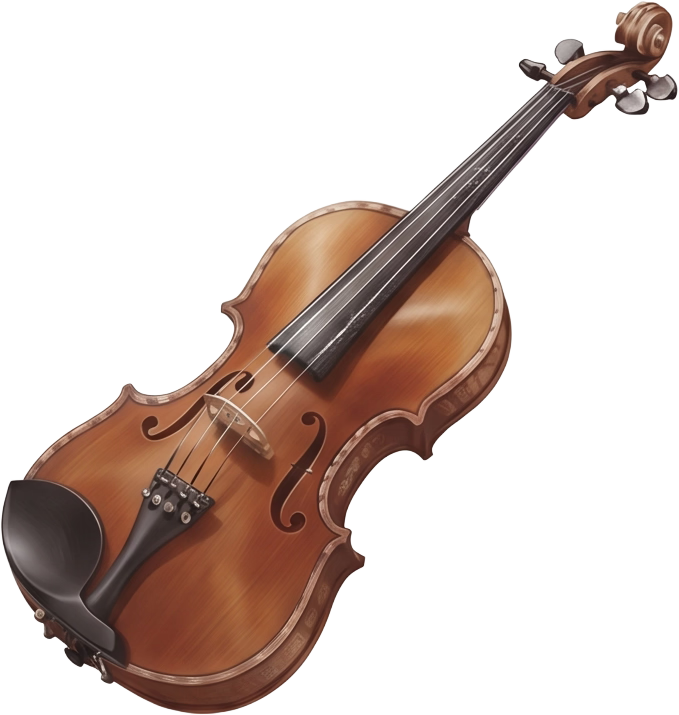
Bowed solo and orchestral instrument
The timbre of the violin is the most flexible and emotional among European instruments. It can be crystal clear, gentle, and weeping, or aggressive, virtuosic, and dramatic. In richness of color, it closely approximates the expressiveness of the human voice.
An elegant wooden body (spruce top, maple back). Hidden inside is a small wooden post—the “soundpost”—that transmits vibrations and shapes the soul of the sound. Four strings (G, D, A, E) are stretched across an unfretted fingerboard. It is played with a horsehair bow.
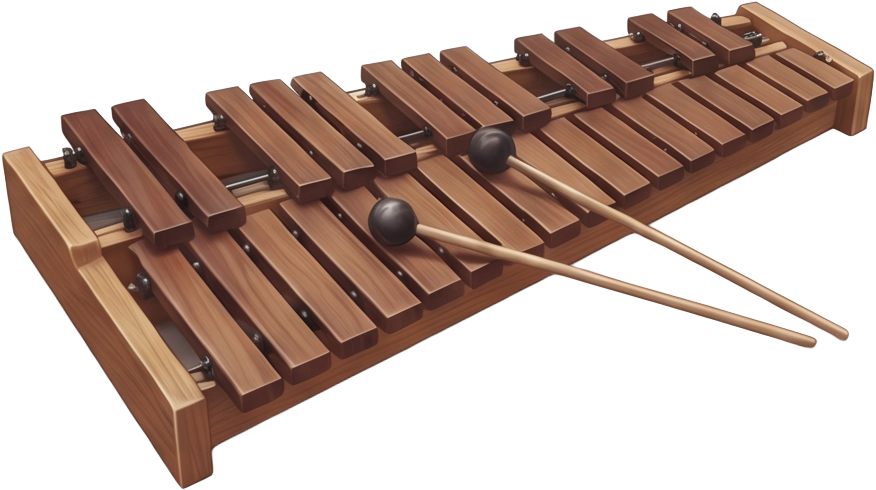
Melodic percussion instrument
The sound of the xylophone is dry, woody, clicking, bright, and sharp, cutting cleanly through dense orchestral textures. It imparts a playful, skeletal, or comical flavor to music.
It consists of a series of wooden bars of varying length and thickness tuned to specific notes of the chromatic scale and arranged like a piano keyboard. The bars rest on a frame over sound-isolating pads. The musician strikes them using two wooden or plastic mallets.
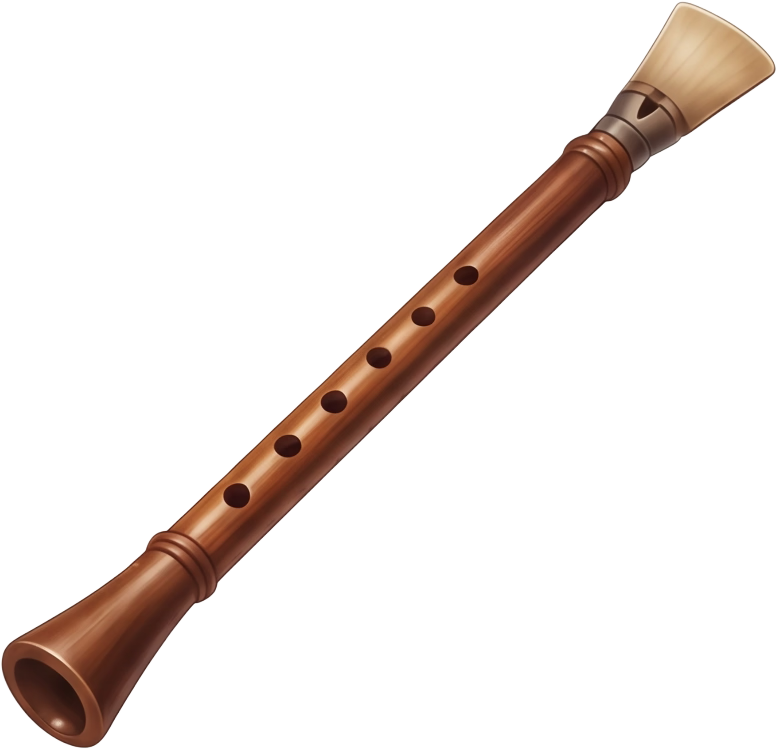
Loud folk wind instrument
The sound of the zurna is extremely bright, sharp, piercing, and triumphant. It is not designed for quiet playing: its task is to cover huge distances in open spaces.
A conical wooden tube (made of apricot or walnut wood) with a wide bell and 7-8 playing holes. A massive double reed with a small metal pipe for pitch adjustment is attached to the top.